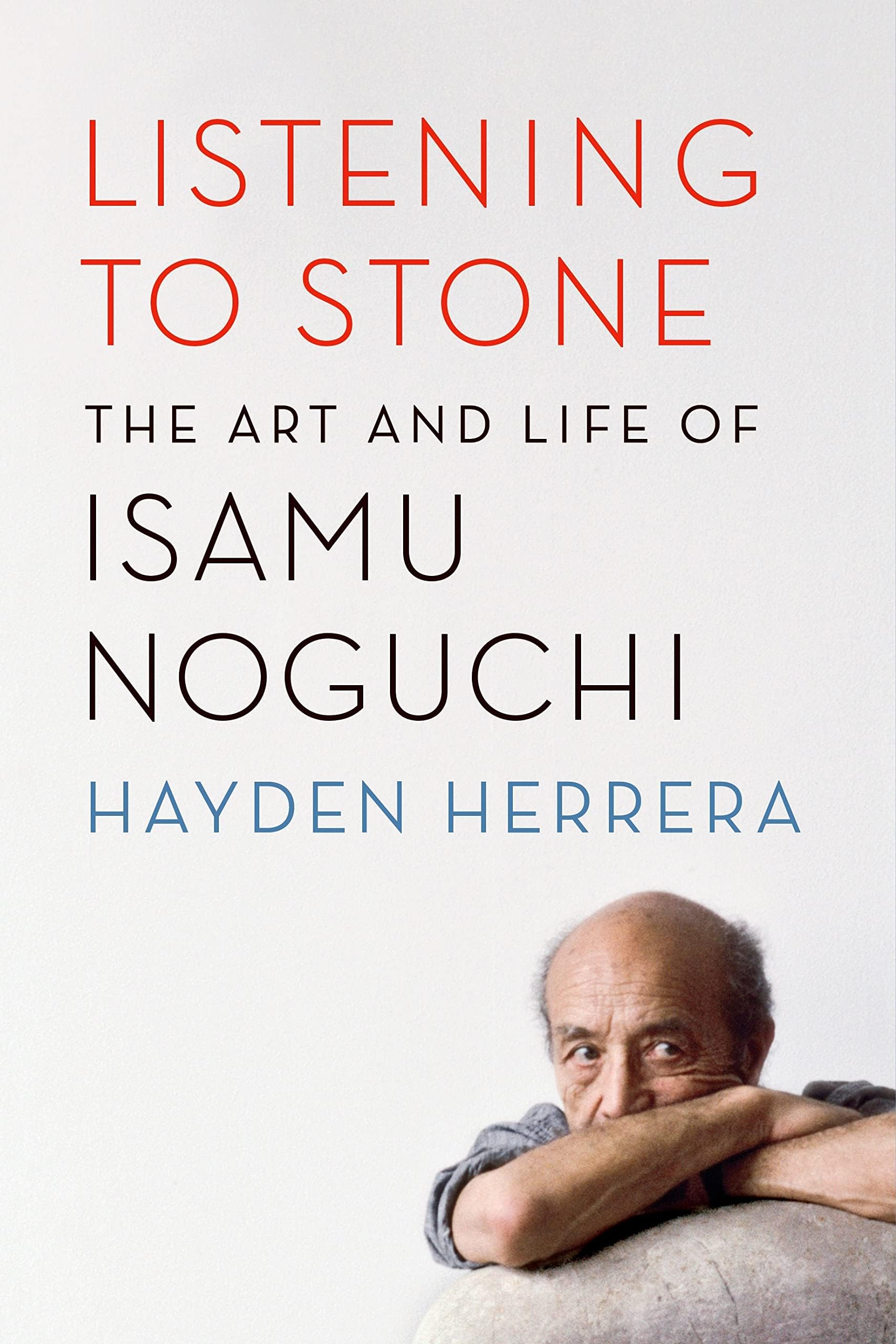

Throughout the twentieth century, Isamu Noguchi was a vital figure in modern art. From interlocking wooden sculptures to massive steel monuments to the elegant Akari lamps, Noguchi became a master of what he called the "sculpturing of space." But his constant struggle-as both an artist and a man-was to embrace his conflicted identity as the son of a single American woman and a famous yet reclusive Japanese father. "It's only in art," he insisted, "that it was ever possible for me to find any identity at all." In this remarkable biography of the elusive artist, Hayden Herrera observes this driving force of Noguchi's creativity as intimately tied to his deep appreciation of nature. As a boy in Japan, Noguchi would collect wild azaleas and blue mountain flowers for a little garden in front of his home. As Herrera writes, he also included a rock, "to give a feeling of weight and permanence." It was a sensual appreciation he never abandoned. When looking for stones in remote Japanese quarries for his zen-like Paris garden forty years later, he would spend hours actually listening to the stones, scrambling from one to another until he found one that "spoke to him." Constantly striving to "take the essence of nature and distill it," Noguchi moved from sculpture to furniture, and from playgrounds to sets for his friend the choreographer Martha Graham, and back again working in wood, iron, clay, steel, aluminum, and, of course, stone. Noguchi traveled constantly, from New York to Paris to India to Japan, forever uprooting himself to reinvigorate what he called the "keen edge of originality." Wherever he went, his needy disposition and boyish charm drew women to him, yet he tended to push them away when things began to feel too settled. Only through his art-now seen as a powerful aesthetic link between the East and the West-did Noguchi ever seem to feel that he belonged. Combining Noguchi's personal correspondence and interviews with those closest to him-from artists, patrons, assistants, and lovers-Herrera has created an authoritative biography of one of the twentieth century's most important sculptors. She locates Noguchi in his friendships with such artists as Buckminster Fuller and Arshile Gorky, and in his affairs with women including Frida Kahlo and Anna Matta Clark. With the attention to detail and scholarship that made her biography of Gorky a finalist for the Pulitzer Prize, Herrera has written a rich meditation on art in a globalized milieu. Listening to Stone is a moving portrait of an artist compulsively driven to reinvent himself as he searched for his own "essence of sculpture." Review: "I Am Always Nowhere" - I’ve seen some of Noguchi’s work, and Hayden Herrera’s discussions of it are enlightening. Still, my fascination is with Noguchi the man. He was clearly not the easiest person to get along with, but his tremendous drive, his insecurities, his amorous quests and intense focus all make for a great story. Imagine a boy of mixed parentage, born in the U.S., raised partly in Japan, who sets off alone at the age of thirteen on a ship bound from Yokohama to Seattle. From there, still alone, he makes his way across the U.S. by train to a boarding school in Indiana. Early on, from a story like this, we see much of Noguchi’s character: he was a traveler, he was unafraid, and he was forever torn between two cultures. Because of his mixed blood, he said, “I am always nowhere.” “When I’m in Japan, I think I should be I the United States, and when I’m there I want to be back in Japan.” This same geographic impulse—“I simply can not stay in one place for a long time”—also seems to have played out with his romantic liaisons. Reading about his long list of lovers, I thought of the old line, “She who flies from me, I follow, and she who follows me, I fly from.” Or, as Noguchi himself put it: “I’m nice to women who are bad for me and bad to women who are good for me.” He could be cantankerous, ungrateful and self-centered—as well as wonderfully buoyant and supportive. It all makes for a great read, in this biography of one of our country’s most notable sculptors. Review: Finally, learning more about Isamu Noguchi! - This extraordinary biography about an enigmatic and extraordinary artist is so clear, but not plain. The prose is transparent to the subject. The author is invisible. And it's factual but not dry.
| Best Sellers Rank | #1,602,043 in Books ( See Top 100 in Books ) #238 in Sculpture Appreciation #713 in Asian & Asian American Biographies #1,331 in Biographies of Artists, Architects & Photographers (Books) |
| Customer Reviews | 4.5 out of 5 stars 89 Reviews |
J**"
"I Am Always Nowhere"
I’ve seen some of Noguchi’s work, and Hayden Herrera’s discussions of it are enlightening. Still, my fascination is with Noguchi the man. He was clearly not the easiest person to get along with, but his tremendous drive, his insecurities, his amorous quests and intense focus all make for a great story. Imagine a boy of mixed parentage, born in the U.S., raised partly in Japan, who sets off alone at the age of thirteen on a ship bound from Yokohama to Seattle. From there, still alone, he makes his way across the U.S. by train to a boarding school in Indiana. Early on, from a story like this, we see much of Noguchi’s character: he was a traveler, he was unafraid, and he was forever torn between two cultures. Because of his mixed blood, he said, “I am always nowhere.” “When I’m in Japan, I think I should be I the United States, and when I’m there I want to be back in Japan.” This same geographic impulse—“I simply can not stay in one place for a long time”—also seems to have played out with his romantic liaisons. Reading about his long list of lovers, I thought of the old line, “She who flies from me, I follow, and she who follows me, I fly from.” Or, as Noguchi himself put it: “I’m nice to women who are bad for me and bad to women who are good for me.” He could be cantankerous, ungrateful and self-centered—as well as wonderfully buoyant and supportive. It all makes for a great read, in this biography of one of our country’s most notable sculptors.
H**N
Finally, learning more about Isamu Noguchi!
This extraordinary biography about an enigmatic and extraordinary artist is so clear, but not plain. The prose is transparent to the subject. The author is invisible. And it's factual but not dry.
S**R
A strong biography, albeit imperfect
Preparing to lead tours of Noguchi's works at the Brooklyn Botanic Garden this fall, I found this biography an extremely helpful resource. It is clean and clear, if a bit prosaic. Herrera leans heavily on Noguchi's own autobiography and seems to draw little from other sources, save a few still living individuals close to the artist, including Noguchi's last lover. The book is best when it maps narrative to image, and the inclusion of some wonderful hard-to-find photos is one of the book's strongest attributes. The book also is especially adept at detailing virtually every lover of import the artist had, including Frida Kahlo (about whom Herrera has also authored a biography), which makes for some saucy reading. The major struggle I faced was the implication that there was a seemingly precise turning point when Noguchi turned from starving and struggling artist to overnight success. This is not, in fact, an accurate portrayal of Noguchi's arc. I don't fault Herrera for failing to capture the trajectory or finding the inflection point, for, in fact, I don't believe there was one. But I'm not sure why she seems to have decided she needed this in the telling of the tale. Another peculiar aspect to the story, related to my primary misgiving, is that Herrera seems to paint Noguchi as a critical failure, even into the 1960s, when he was anything but. On the one hand, he was receiving, she points out, retrospectives and major commissions around the globe. Yet, she routinely depicts reviews of the artist's work that carried harsh judgments or worse. I suspect Herrera selects this approach to continually cast her subject as an underdog, but it creates the peculiar impression that Noguchi was not an accepted artist when he clearly was. These are, in the end, relatively small problems in a well-constructed, competently researched narrative. But they leave the reader wondering why Herrera didn't thread the needle just a tad more carefully -- in the service of what would have made this important book even more believable.
L**T
He is one of my favorite sculptors so I found it fascinating to read about ...
Very well written. Herrera very wisely frequently uses Noguchi's own words. He is one of my favorite sculptors so I found it fascinating to read about his development as a man and an artist. It was immensely interesting to learn about what influenced him, the trajectory of his career and the development of and living with his Eastern/Western conflict. I highly recommend this book.
P**N
Excellent book
Beautiful book; well researched; beautifully written. Thank you!
B**O
Thorough, and entertaining
You may not end up loving the man, or every moment in his ever-changing approach, but when he's on, he's on.
A**R
Nothing to add
Sometimes a little too much detail. Enjoyed reading about such an interesting person and how he evolved to such an amazing artist / furniture designer. Interesting to read about the time he lived.
A**R
Great read for an art lover
Great read for an art lover. The author uses a sparse and smooth writing style. The rare subjective commentary was thoughtful.
I**.
Great book, fast shipping.
I love this book, it arrived earlier.
C**E
LOVE IT
I bought it few years ago. its a beautiful biography
M**G
Bin begeistert....
Sehr guter Zustand, traumhaftes Werk, dessen Lektüre ich nur sehr empfehlen kann, Isamu Noguchi zählt zu den ganz großes seiner Profession. Eine Bereicherung sich über Leben und Werk zu informieren....
Trustpilot
1 month ago
1 month ago