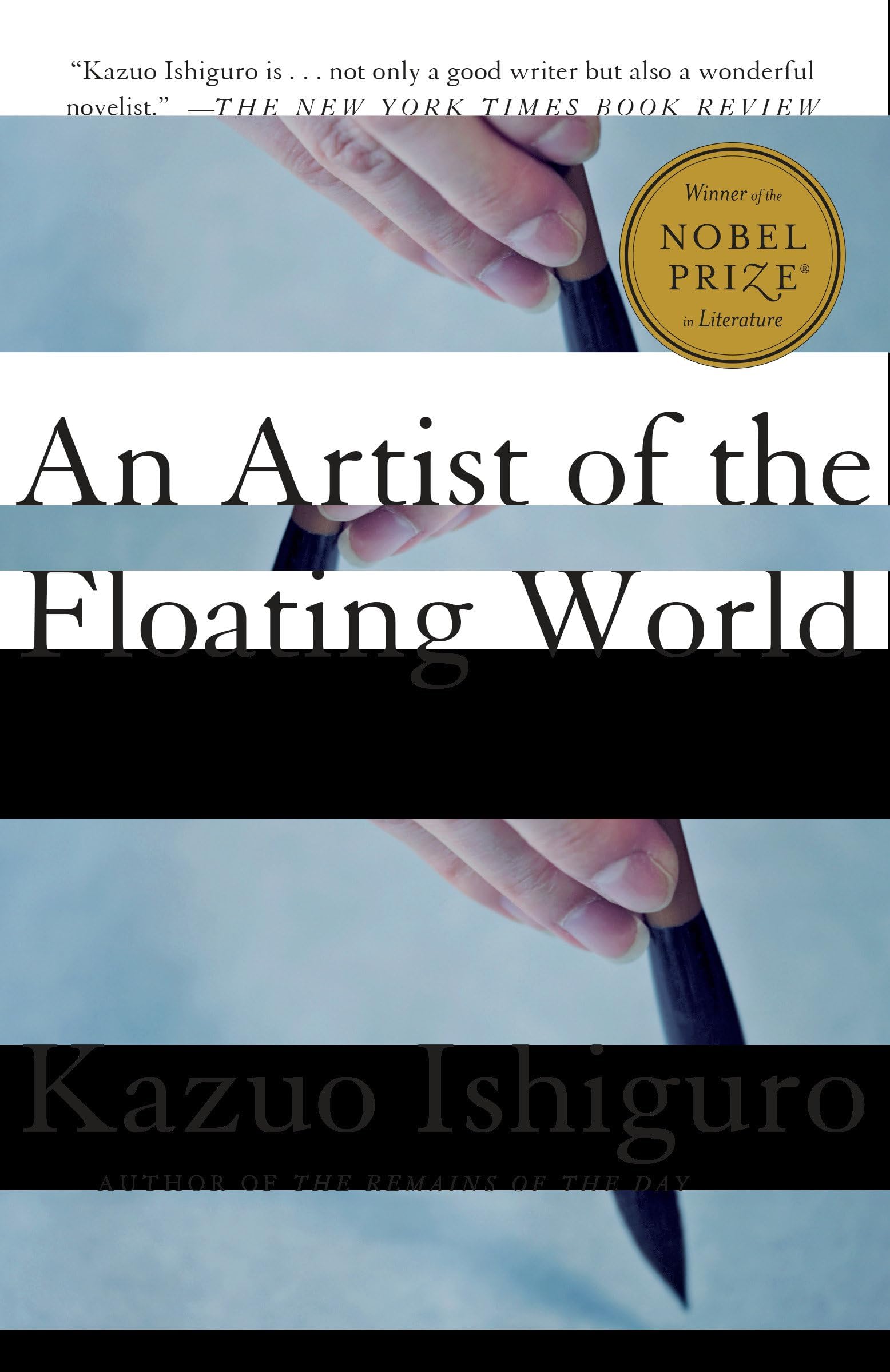
An Artist of the Floating World (Vintage International)
Desertcart purchases this item on your behalf and handles shipping, customs, and support to Senegal.
Description
From the winner of the Nobel Prize in Literature and author of the Booker Prize – winning novel The Remains of the Day In the face of the misery in his homeland, the artist Masuji Ono was unwilling to devote his art solely to the celebration of physical beauty. Instead, he put his work in the service of the imperialist movement that led Japan into World War II. Now, as the mature Ono struggles through the aftermath of that war, his memories of his youth and of the "floating world"—the nocturnal world of pleasure, entertainment, and drink—offer him both escape and redemption, even as they punish him for betraying his early promise. Indicted by society for its defeat and reviled for his past aesthetics, he relives the passage through his personal history that makes him both a hero and a coward but, above all, a human being.
Specifications
| Dimensions | 5.18 x 0.56 x 7.98 inches |
| Edition | First Edition |
| Isbn 10 | 0679722661 |
| Isbn 13 | 978-0679722663 |
| Item Weight | 2.31 pounds |
| Language | English |
| Print Length | 206 pages |
| Publication Date | September 19, 1989 |
| Publisher | Vintage International |
Reviews
User
I don't thing there another writer that can tell this story
I would call this the perfect Japanese novel. I think only Ishiguro can pull it off. I've lived in Japan off and on for 35 years. I've read many novels and non fiction from Japanese and expat authors. Foreign writers fall into the trap of overeffort conveying the Japaneseness of every scene; the bowing, honorifics, who serves who, who keeps their mouth shut and they feel a need to write 10-20% in "Nihongo". The story and the characters are drowned in this obsession with authenticity that bores and fails. Japanese writes; unaware of any need to explain themselves as it's the air they breathe write some very fun books; "Out" by Natsuo Kirino or "All She's Worth" by Miyuki Miyabe are good examples.Ishiguro finds perfection in not dwelling on words or custom but finds subtle ways to create scene and atmosphere. And he then attacks a topic - the adjustments in life in post war Tokyo that have rarely been more peronalized and portrayed. The constant ebb and flow of resentments or progress that permeated not just the economy but every aspect of life.It's 1949. Masuji Ono is around 60. In many ways his world is shattered. His son and wife are casualties of the war. His role in the government largely assisting propaganda art is not so respectable. One married daughter is devoted to him but lives far away and a second daughter has just experienced a rejection of a negotiated wedding proposal at the last second.Is Ono's past now hurting his daughter? We are not sure. Ono is a completely unreliable narrator. He's very interesting; recalling the past in ways that may show him important in some ways but benign in others. What is the truth is hard to divine and is almost beside the point. He loves his daughters. He wants to express something to help her next marriage proposal; is it regret for things he claims in his mind he did? Or is it more like Walter Mitty to admit he wasn't that relevant. It's an amazing condition to consider the delusions and the right path forward. And Ishiguro's balance of understanding Japan and the foreign reader and having the talent to write so well makes him so uniquely qualified to write this story. Well worth reading.
User
Beautiful style
I'll be the first to admit that I did not enjoy "Never Let Me Go," but removing Ishiguro from the science fiction genre seems to have allowed his distinctive style to shine through. Ishiguro perfectly captures a Japanese style of thinking, of feeling, even of raw culture in his writing. If you read this book for no other reason, read it as a study in subtle cultural cues as they appear in writing. The style also allows for the subtleties of the unspoken to bleed through. A great deal of the novels central elements are not dealt with directly and are only spoken about in parallel.Beyond the style, the story does stand on its own. The characters are dynamic and all seem to have their own agendas and motivations. Everything moves towards a climax with a resolution. It's not really evident what that climax is at first but in retrospect it is pretty clear.The only reason I did not give this novel five stars is due to its frame narrative. I just don't understand why the story is being told and who the audience is. I think most readers wouldn't even notice and I feel kind of bad bringing it up because now it just feels like I'm drawing attention to it... yeah, I'm going to stop now.Read for the style, stay for the story.
User
Propaganda artist for a dictator, or humble servant?
Ishiguro has always been one of my favorite authors with his subtle prose, and he seems to pack a punch with his powerful, underlying meanings. Never take a word, scene, or conversation of his for granted in any of his novels because while they may seem simple at the outset, Ishiguro writes with a very strong purpose, tying everything together beautifully at the end.Now, in An Artist of the Floating World, imagine drawing propaganda posters for an imperialist dictator, and then finding that you, your talents, and everything that you believed in was wrong. What do you do at the end of WWII? Ishiguro delves into this dilemma of cognitive dissonance with great aplomb - do you dig in your heels and continue to defend your actions that supported a vicious dictator and thus ostracize yourself from your new world/society? Or do you swallow your pride, dress yourself with humility, and perhaps - at the advice of your own daughter no less - commit seppuku? Where does arrogance end and you again become human? What do you do?This is such a phenomenal idea of Ishiguro to take on, and I feel he somewhat succeeded. Perhaps the story was too subtle for me, more so than his other books, and I struggled with trying to understand this character. Remains of the Day was by far Ishiguro's best novel (so far anyway), but this was pretty typical for his beautiful prose as he wrestles with intense moral situations. At the very least, you see that people are human in the end and make - sometimes - terrible mistakes. In this case, Ono's terrible mistake encouraged the loss of thousands of lives.Ishiguro has another novel coming out in the Spring of 2021, and I greatly look forward to reading another of his books
User
Slow, Luscious and Delightful
The protagonist and narrator is Masuji Ono and it is set 3 years after the end of WWII. Ono has managed to hold on to his assets and it begins as he is negotiating for the marriage of his youngest daughter. The novel is constantly going back and forth in his life as he is currently elderly in the telling of this novel.In the buildup to WWII, Ono is a promising young artist who breaks away from his teacher and his way of doing art. He becomes involved in making propagandistic art before and during the war and becomes an advisor to the Unpatriotic Acts Committee and even turns in one of his own students. Throughout the novel he comes to terms with the mistakes he made when he was young even though he did them for the best of reasons. He begins to think his daughter may not be able to get married because of his past.He has many fond memories of what he calls the pleasure district and where he spent much time as a young man. Since a lot of his city has been bombed and remains in ruins this district is obviously gone except for one bar which only he and one other man frequent. He has retired from his life as an artist and his son and wife are both dead but he is a grandfather by his oldest daughter who he only sees once a year or so.It's a story about the way life changes and societal attitudes change over time. It's also about a man looking back on his life and his mistakes and taking responsibility for them. You will be surprised at what he does take responsibility for and what he does not.
User
Glimpsing Cultural Changes Across Generations
An Artist Of The Floating World is a wonderfully constructed reflection on post war Japan as experienced by a man who had been a promising artist focusing on images of the old order , Geishas and Nightlife of the pre-war period. (The Floating World) . He is wrestling with reconciliation following Japan's defeat as evidenced through his relationship to his two adult daughters and his reflections on the past which slowly illuminate his very personal relationship to the events that brought such dramatic change to Japan.This is a beautifully written novel that very gradually reveals how the past can haunt individuals and encroach on the present in very real terms. Wonderful reading and highly recommended.
User
A quiet novel about art and war and good intentions
"An Artist of the Floating World" is a beautiful little novel, written in typical Ishiguro style, with the calm surface waters belaying the rapid current that flows beneath. It is an interesting style that attempts to ape classical Japanese literature, infusing it with Ishiguro's innate Brittishness, coming from being born of Japanese parents but raised in Britain.As with his other novels, and part of his style, a knowledge of historical events is taken for granted on the part of the reader. Allusions are made to once-famous or infamous events and people, and names are dropped with the understanding that everyone is intimately familiar with WWII and the cultures of Japan and England.The title is a bit misleading, as the "Floating World" is usually associated with the Edo period of Japan, and not with the Fascist era of Showa. Anyone expecting Geishas and Samurai will be disappointed.A very quick and quiet read, "An Artist of the Floating World" is something than can be read over a weekend with a cup of green tea. It contributes a viewpoint, and a necessary one, to WWII Japan and paints a human face onto a troubled period of history. Love and family and duty are on display here, along with good intentions leading down dark paths, and the righteousness of actions and re-actions.Like "Remains of the Day," "An Artist of the Floating World" is an intimate, beautiful character sketch. Very much worth the limited time needed to enjoy the book.
User
Memories are not always truth
Masuji Ono is a retired artist in post WWII Japan. Much like the butler in Remains of the Day he is thinking back over his career. In this case he recalls his participation in the nationalistic fervor that brought destruction to his country. His art is all hidden as though it is an ugly secret. Ono is worried about marriage negotiations for his daughter and thinks a prior negotiation fell through because of his past. At first it seems he might be right. His prewar activities are an issue. But over the course of the novel you start to wonder. Is Ono really as important as he thinks he is? It is a fascinating study on how our memories color our present and our beliefs about ourselves and others.
User
Haunting and Beautiful.
Review: An Artist of the Floating World, by Kazuo IshiguroMemory and the heart. Such fragile things on which to build our notion of ourselves. The old prophet Jeremiah said, “The heart is deceitful above all things . . . Who can understand it?” Memory is surely at least as deceitful as the heart. Both memory and the heart seem to be at the mercy of the transient, ephemeral world of human life. And they are central to the fiction of Japanese writer Kazuo Ishiguro.An Artist of the Floating World is a beautiful emotional set piece. Following World War II, an aging Japanese artist struggles to integrate his experience of post-war Japan with the memories of his pre-war life and his role in the rise of the empire that ended in the destruction of the old world.Kazuo Ishiguro may be best known for his novel The Remains of the Day and its film adaptation, with Anthony Hopkins as the butler Stevens and Emma Thompson as Miss Kenton. There are significant similarities in tone and theme between the two novels. In both cases, the main character looks back on a career in which he devoted his life to a cause that was later shown to be horribly mistaken and in which he turned his back on a path that would have resulted in a different, and probably more fulfilling life. In The Remains of the Day, Mr. Stevens does not marry Miss Kenton, and in An Artist of the Floating World, the artist Masuji Ono turns his back on “fine art,” the art focused on the fleeting beauty of this world, in order to make his art serve the empire of the “New Japan.”Both novels are told from a perspective not long after the war, looking back on a time prior to and during the war, blended with the narrator’s current life. The tone of both is nostalgic, beautiful. In An Artist of the Floating World, Ishiguro’s use of an unreliable narrator, whose growth in the novel is toward self-realization, is masterful. Numerous times in the narrative, the artist Ono says it is entirely possible that his memory of an event or conversation is not accurate, that things might not have happened exactly as he presents them. These admissions become part of his growth in awareness of self, and are some of the elements that make him sympathetic and human, and very like all of us.A reader who identifies with Ono, and feels compassion for him, may experience in reading this novel what Aristotle called catharsis in his Poetics, a vicarious purging of guilt and fear, the impetus toward self-understanding. Ishiguro seems to be saying that as we grow older, we come to realize how much of our image of ourselves is dependent on feeling and memory, and we come to understand how fickle, how deceitful, those things can be. And if we are to live in peace with ourselves, we must see ourselves honestly and forgive ourselves for all the well-intentioned errors of the past. Only then can we live with integrity and dignity.
User
Me quedé a medias.
Leí otro libro de éste autor que me encantó. Sin embargo, hasta la fecha, éste se quedó a medias.
User
An interesting collection of tales
Maybe not my favorite Ishiguro book, but the stories contained in this volume are interesting and you end up wanting more. If you like Ishiguro, you must read it. Oneiric and magic!!
User
ブルゴーニュワインの持つ気品とふくよかな余韻
太平洋戦争勃発前夜の1930年代末から戦後の1950年代初頭の激動の日本社会を舞台に、一人の画家の半生を静かな筆致で描いた作品。背景となった時代は激動のそれであるが、回想を通して描かれる画家の日常はすこぶる静穏であり、イシグロ独自の静かに語りかける筆致は、本書のプロットに見事に調和してふくよかな余韻を残す。 語り手の画家をとりまく家族や人々の生活風景を横糸に、当時代の社会と芸術との葛藤を縦糸として、一つの上質なテクスチャーを織りなしている。本書には小説全体をドラスティックに性格づけるような明瞭な物語は登場しない。市井の平凡な市民の日常と一人の画家の心象風景が描かれるだけである。物語のドラマ性に依拠しない作風はイシグロ作品の特徴であり、イシグロの作家としての資質が最も顕著に発揮される部面でもある。 イシグロは「The Remains of the day」で衰退に向かうイギリス貴族社会に仕える執事の日常を徹底して抑制の効いた筆致で描いたが、本書にもそうした寡黙な筆致に由来する静謐さが通奏低音のように流れている。それは寡黙が故に多くの意味を暗示する、語らずして語る逆説の雄弁といえるものである。 多くのイシグロ作品がそうであるように、個人対社会、個人対時代という対位法的小説技法を用いながら、イシグロの視線は社会が内包する矛盾や不条理を訴えるといった方向には向かわない。矛盾と不条理が交錯する現実社会に背を向けて自己の内的世界に自閉することもない。イシグロの視線はあくまで矛盾や不条理に向き合って生きるリアルな大衆の日常に注がれる。 本書に登場するのは、勝利や成功を手にしたエスタブリッシュメントの階層世界に生きる人々ではない。日常の大半をルーティーンな労働と小市民的慰藉に安寧を見出す、いわば勝利や成功とは無縁の世界に生きる人々である。では彼らは社会のかたすみに追いやられら、見捨てられたみじめな敗北者なのかというと、イシグロの見立ては全く異なるのである。 大衆は社会や時代に翻弄される一方で、現実を所与のものとして受容し、肯定しながら、それとは気づかない匿名性の裡に徐々に社会や時代を自身に同化させていく。人生というものは矛盾や不条理を含むものではあるけれど、大衆にとってそれらは対立し、克服する対象ではない。あくまで所与の運命として受け容れるべき与件なのである。イシグロに言わせれば、矛盾と不条理を鷹揚な態度で呑み込んでしまう彼らはむしろ社会の勝利者なのだ。そうした大衆社会の持つ生のダイナミズムというようなものにイシグロは常に寄り添うのである。 大衆はその出自や境涯の類縁性の故、協同し、互助しながら、一方で互いに反目し、論駁し、時に排斥さえもする。大衆は鷹揚で慈悲深く、時に崇高な思慮を示す一方で、気まぐれで、身勝手で、野卑であり、残酷ですらある。イシグロは、そうした大衆社会の持つ両義性と多様性の中に、エスタブリッシュメントの世界にはない、大衆だけが享受し得る、したたかで自由な人間世界を見出しているのだろう。 激動の時代の下層を流れる市井の日常を、静止したカメラレンズを通して記録するようなイシグロの筆致は、戦前から戦後間もない日本社会という舞台設定も手伝ってか、近代日本文学興隆期の私小説の趣を感じさせる。それは寡黙で控えめな映像の背後に、豊饒な言葉が横溢する小津安二郎の世界を彷彿とさせるものがある。あるいは直截な自己主張を抑制しつつ、やがておもむろに出自を語り始める上質なブルゴーニュワインの持つ気品とも云えるだろうか。
User
Assessing the past…
In 1948, when we first meet him, Masuji Ono is an elderly man. He is a widower, his wife killed when their house was bombed during the war, while he also lost his only son, killed serving in the army. He has two adult daughters: the elder, Setsuko, is married with a young son; the younger, Noriko is 26 and negotiations are currently underway for her marriage. Similar negotiations for her to marry a different man had fallen through the previous year, and while neither Ono nor Noriko can be sure why, Setsuko hints to Ono that it may relate to his past actions before and during the war. So Ono sets out to visit the people he knew in the pre-war days to ensure they will say nothing to damage Noriko’s chances. As he reminisces about the past, we gradually learn about life before the war and the part that Ono played, and we see the new Japan, struggling to reinvent herself after her humiliating defeat, now under the control of the US and the spread of American hegemony.Beautifully written, this is a brilliant character portrait of a rather unlikeable character for whom I nevertheless grew to feel a great deal of empathy. In pursuit of his daughter’s happiness, Ono is prepared to show a humble, almost apologetic face to the world, but the reader, privy to his private thoughts, knows that inside he feels he was right to support the militaristic regime that younger Japanese people blame for the slaughter of the war. But it’s more complex than that, because gradually we realise that there are odd inconsistencies in Ono’s memories, or at least in his narration of them. In his mind, he played an important role, but is that the view of others, or is he allowing a sense of self-importance to give us an inflated picture of his past relevance?As a young man, Ono trained as an artist under his sensei, Mori-san, who taught his pupils to reach for an ideal aesthetic through representations of the “floating world” – the pleasure district of the city where men congregated for night-time entertainment. This in itself is fascinating, giving a real insight into how artistic schools operated in Japan at the time, with the close, almost familial relationship between sensei and pupils, and the resulting strict adherence to artistic traditions. Later, Ono breaks away from his sensei and begins to develop his own school and reputation, eventually painting propaganda posters in the fascist style, promoting the idea of empire through war. It is for this that Ono tells us he was once lauded, but is now expected to feel shame. We hear of the suicides of other men who promoted the culture that led to the disastrous war, and we know, or think we do because Ono tells us, that Ono’s daughters fear he too may decide that is the honourable thing to do.You’ll be able to tell from my qualifiers that Ono is very definitely an unreliable narrator. However, while the details of his past importance may be exaggerated (or may not), through him we get a very clear picture of the psyche of a defeated and subjugated nation, and of the resentment of the young who fought and saw so many comrades die, and who hold their elders responsible – those elders who upheld the now discredited regime, and sat at home while they sent their sons as sacrifices to their own desire for glory.The contrast between pre- and post-war Japan is stark – much more so than in any of the winning Allied nations whose cultural trajectories remained largely unchanged. For the younger Japanese people the new world has much to offer, and they are ready to embrace the values brought to them by the Americans, but the old remember the culture and values they have lost. Ono is open enough to see the benefits of some of the changes and to wish the young people well in the recreation of their society and their pursuit of a new kind of national pride, but he is also nostalgic for the past – for the personal prominence he once felt was his due, and for the culture and art embodied, for him, in the now defunct floating world of bars and geishas. The pleasure district has now been replaced by offices where the young Japanese people throw themselves into the pursuit of capitalism with the same dedication as Ono’s generation pursued empire, offering their unquestioning loyalty to their superiors at work with as much enthusiasm as their parents offered to the military leaders of the old regime. There is an underlying feeling that although the aims differ, the fundamentals of the Japanese psyche are less altered than they might seem at a superficial glance.A great novel, that reminds us that perceptions of war and glory and heroes depend entirely on whether one is victorious or defeated, and does so through the very human story of one man.
User
Sofisticada literatura
Para uma leitura mais reflexiva e cuidadosa
Common Questions
Trustpilot