
Buy anything from 5,000+ international stores. One checkout price. No surprise fees. Join 2M+ shoppers on Desertcart.
Desertcart purchases this item on your behalf and handles shipping, customs, and support to Senegal.
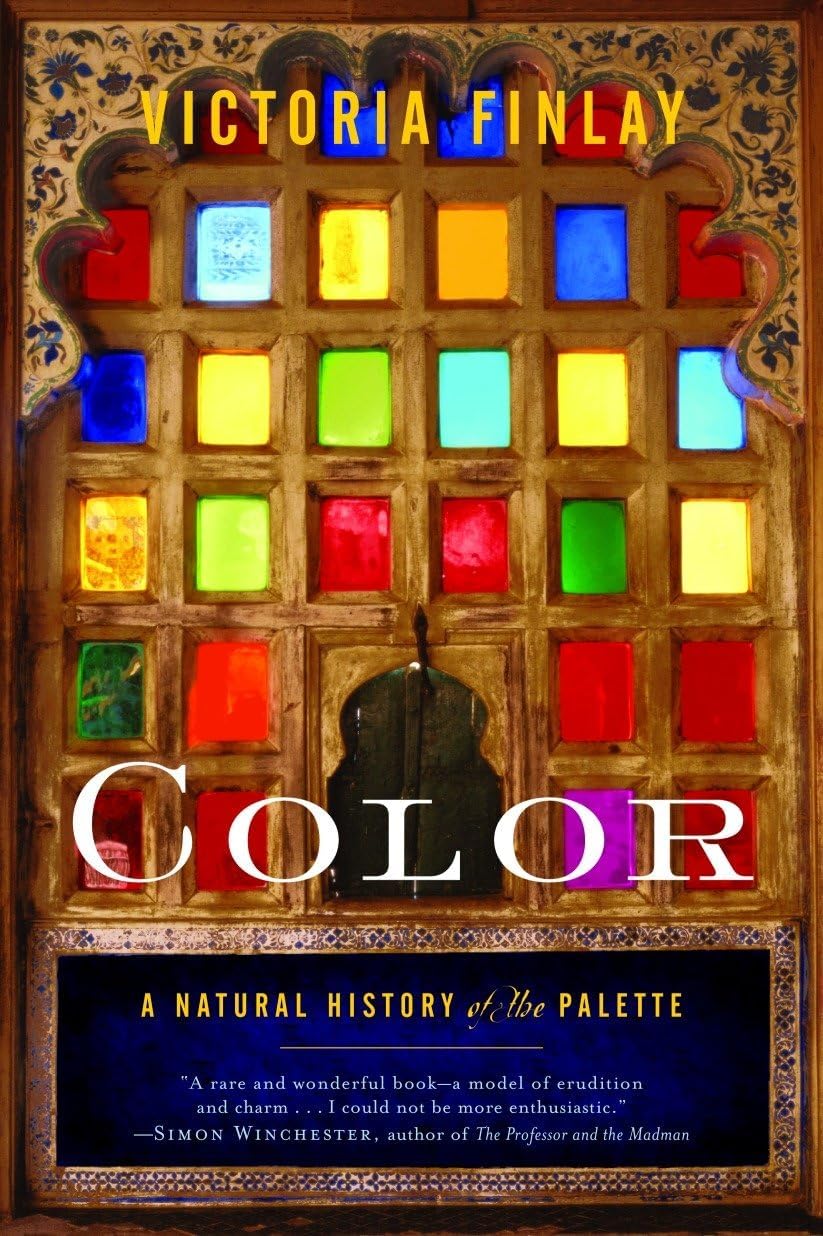
In this vivid and captivating journey through the colors of an artist’s palette, Victoria Finlay takes us on an enthralling adventure around the world and through the ages, illuminating how the colors we choose to value have determined the history of culture itself. How did the most precious color blue travel all the way from remote lapis mines in Afghanistan to Michelangelo’s brush? What is the connection between brown paint and ancient Egyptian mummies? Why did Robin Hood wear Lincoln green? In Color , Finlay explores the physical materials that color our world, such as precious minerals and insect blood, as well as the social and political meanings that color has carried through time. Roman emperors used to wear togas dyed with a purple color that was made from an odorous Lebanese shellfish–which probably meant their scent preceded them. In the eighteenth century, black dye was called logwood and grew along the Spanish Main. Some of the first indigo plantations were started in America, amazingly enough, by a seventeen-year-old girl named Eliza. And the popular van Gogh painting White Roses at Washington’s National Gallery had to be renamed after a researcher discovered that the flowers were originally done in a pink paint that had faded nearly a century ago. Color is full of extraordinary people, events, and anecdotes–painted all the more dazzling by Finlay’s engaging style. Embark upon a thrilling adventure with this intrepid journalist as she travels on a donkey along ancient silk trade routes; with the Phoenicians sailing the Mediterranean in search of a special purple shell that garners wealth, sustenance, and prestige; with modern Chilean farmers breeding and bleeding insects for their viscous red blood. The colors that craft our world have never looked so bright. Review: This book is a minor work of art - This is one of the most interesting & enjoyable books I've ever read. I bought my own copy at a local art-supply store. My wife read my copy & really loved it too. Subsequently, I bought two more copies of this book for gifts to family members, who are avid readers with wide-ranging interests. This book has a wealth of information about, well "color" that's technical, artistic, historic, and cultural. The author travelled the world (part of her job as a writer & reporter) to gather, firsthand, diverse & unique material for this book. Being a skilled writer, she puts everything together in a book that I'd consider to be a minor work of art. Review: A wonderful history of the artist's palette. - Excellent book. There is nothing else quite like it. It is a history of the palette, i.e. of when and where the colors used in art came from, and they all have fascinating stories behind them.


| Best Sellers Rank | #102,531 in Books ( See Top 100 in Books ) #5 in Afghanistan Travel Guides #71 in Graphic Design Color Use #127 in Art History (Books) |
| Customer Reviews | 4.5 out of 5 stars 857 Reviews |
A**S
This book is a minor work of art
This is one of the most interesting & enjoyable books I've ever read. I bought my own copy at a local art-supply store. My wife read my copy & really loved it too. Subsequently, I bought two more copies of this book for gifts to family members, who are avid readers with wide-ranging interests. This book has a wealth of information about, well "color" that's technical, artistic, historic, and cultural. The author travelled the world (part of her job as a writer & reporter) to gather, firsthand, diverse & unique material for this book. Being a skilled writer, she puts everything together in a book that I'd consider to be a minor work of art.
B**N
A wonderful history of the artist's palette.
Excellent book. There is nothing else quite like it. It is a history of the palette, i.e. of when and where the colors used in art came from, and they all have fascinating stories behind them.
C**S
Lots of facts and observations in a relaxed presentation.
In some ways, this little book is hard to explain. Finlay is an excellent writer and thus much of the book is her exotic travels to seek the source of exotic colors from around the world. However, she also explores the history of certain pigments, paints, dyes, and other products. She also gives very interesting details on the production of these pigments,some of which required considerable costs and effort. Finally she gives interesting information about the pigment or product itself, focusing on various chemical properties, such as whether or not it is a poison or is light fast. I enjoyed her early chapters on the production of paint, ranging all the way from ancient Roman encaustic painting, the hand ground pigments of the Renaissance, and the birth of more standardized paint products during the Industrial revolution. It is fitting that Finlay starts her discussion with ocre, the most common of the dirt colors, which has given us such a broad range of tones through the centuries. In her chapters on Black and Brown, we learn the origins of charcoal, pencil, and ink drawing instruements. In her chapter on White, we learn the terrible history of lead poisoing for those who wore White Lead makeup. In the chapter on Red we learn all about the cochineal beetle, that eats cactus, and has brilliant red blood - the color often called Carmen. We learn of other reds, such as Rose Madder, made from rose petals. Oranges may come from various plant sources and show up in varnish. We hear of brilliant yellows from the urine of cows fed mango leaves, or brilliant but poisonous greens - one of which is suspected of poisoning Napoleon with arsnic infused wallpaper. Finlay goes to Afganistan to seek lapis blue and has some interesting tales to tell about the Taliban. She ends with Indigo and Violet to complete the spectrum. Interesting reading, relaxed and tangential at times, but well researched and factual; every studio art and art history student should read it.
A**R
Fantastic read!
Loved this book. Bound it because color has always intrigued me in my photography. This book went way beyond what I even imagined was involved in colors. A very detailed journey into the history of color.
B**A
Delightful combination of pigment history and travelogue
Colors have fascinated author Victoria Finlay since her childhood. She takes this enthusiasm and an intrepid sense of adventure to travel the world looking for the sources of the greatest pigments for each color of the rainbow. Before she gets to the actual rainbow, she starts with ochre, black, and brown, which were the most ancient colors used by prehistoric man in cave painting. In addition to describing her travels and how the pigment or dye is harvested, she writes about the natural history of that color, such as purple having been the color of royalty due to the extreme cost of the dye. She also writes of how natural colors, such as cochineal from insects, were later supplanted with synthetic dyes, but they are now again enjoying a resurgence in fine artisnal craft work. The whole trip is quite enjoyable; Ms. Finlay proves a friendly, exhuberant and knowledgable guide. Her writing sparkles. The reader learns much about colors and pigments and the people who make them in an enjoyable and satisfying manner.
E**.
Fine. Not quite what I was expecting
This book was okay - not great, but not boring either. I thought this would be a history of the different colors but it was more a travelogue with historical snippets thrown in. I just noticed on looking it up on Amazon that the British version of this is subtitled Travels through the Paintbox, whereas the American version is subtitled A Natural History of the Palette. Unsure why they changed that when it crossed the pond, as the UK version more clearly states what the book is about. I found the historical elements to be far more interesting and wish that the book had been more about that - those were the parts of the chapters I was always more intrigued by. As an artist myself, I am interested in learning as much about art history as I can. Whenever the author switched to talking about her travels and tourist activities (because they did not read as serious research trips ever - has this woman ever used the internet to research her destinations or even called any people in the country she's going to ahead of time?!). She mentioned using out of date travel books and used travel info from 10 years prior at one point to guide her travels. It just felt...shoddy for what was purported to be scholarly, research trips. I was a bit put off by some of the dumb things she did in the name of "researching" her book - she traveled to Afghanistan right after 9/11, completely refusing to heed well-earned warnings about traveling there. She somehow managed to finagle a visa meant for people working with NGOs in the region at the time, which to me just came across as immature and really selfish. As a reader, I could care less about how much she had to hike to get to a lapus lazuli mine or how she supposedly charmed the mine workers as the only white woman they'd seen. That literally had nothing to do with the history of the color blue that the chapter was supposed to be about. Anytime her writing veered into her recounting her travels it just felt self-indulgent and more like a diary ("Dear Diary, I couldn't find any coffee this morning because the whole country was in mourning over the just deceased leader. I couldn't go to the place I wanted and it was so annoying."). I was also taken aback by some of her glaring ignorance (you didn't bother to look up what an indigo plant looked like before you left to try to see one in India?) and just silly musings - it read sometimes like I was reading something by a teenager rather than an supposedly educated adult. At one point, she's trying to "outwit" some guards at an archaeological site to get a look at some ancient dying vats by pretending to "look dreamily out at the ocean" and then running over old columns when they looked the other way. If that is what you traveled so far to see, why wouldn't you call ahead and get access with a guide to a part that is usually not accessible to the general public? There was time after time mentioned where she showed up to a place and then was surprised by not being able to get in or not being able to see what she wanted or she'd arrived just before closing time. I'm giving this 3 stars as the historical information was actually really good and very interesting, and I liked all the extra information in the extensive notes in the back. If she had just stuck to the history, I would have enjoyed this a lot more. All the stories and actual historical info kept me intrigued, but the book always lagged as soon as she started talking about all the details of her travels.
L**A
Will Make You Rethink the Rainbow
A surprisingly fun read, this is the history of colored paints and dyes. These days, artists buy their paints in tubes from the art supply store, but the old masters had to mix their own. This book talks about finding lapiz lazuli from a single mining town in Afghanistan, and crushing that blue stone to create the most wondrous shade of blue, first found 7,000 years ago on Buddhist statues. Green celadon was a seaweed green porcelain that only Chinese emperors could own. When an ancient temple collapsed in modern China, secret treasure vaults were discovered that yielded the unusual tableware. Finlay describes her many trips to the subcontinent in search of Indian Yellow, supposedly made from the urine of cows that are fed mangoes. And, of course, let's not forget the purple vomit of sea mollusks, the deep red blood of crushed beetles, the demanding work of separating saffron from crocuses, and the many trials and tribulations of those artists who worked with mercury, lead, cobalt and arsenic. This is as much a travelogue as it is a vibrant history of color throughout the ages, and the great lengths that artists would go in search of the perfect color.
T**Y
A personal tale of color, well researched, scholarly, yet written without stuffiness or jargon. Fascinating and easy to read.
Awesome book. Scholarly, yet written in a conversational style. There is nothing dry or textbook-ish about this read. Victoria Finlay manages to trace the history of color in a very personal way, and she takes the reader with her on her journey of discovery. The book is well researched and documented -- with index and bibliography . The footnotes are a fascinating book onto themselves. This was a huge undertaking -- and very successful. If you paint, color, sew, photograph, or just love the brilliance of nature, you need to read this book. If you are curious about the origin of things, the "whys" and "hows" -- and/or you're fascinated by history, this book is for you, too.
P**K
grand retard, coûts extra, chaos total
le livre est bien reçu - 10 jours en retard, sans explication ni excuses - et je devais payer 10 euros extra pour la livraison. après 3 jours et de divers communications avec le vendeur et amazon.fr, ces couts extra seront remboursee, on ecrit. on verra... très mauvais service. ce vendeur est déconseillé.
L**A
Hermoso
me encantó El libro está lleno de hechos y notas al pie. ¡Fue un gran viaje a través del tiempo, el espacio y los colores! Nota de pie de página realmente interesada y un gran viaje de descubrimiento.
A**A
Bellissimo
Libro molto bello, racconta la storia dei colori svelando ciò che non immaginavo. Da leggere per chi si avvicina al mondo dell'arte in tutti i sensi, o per chi è semplicemente curioso!
B**Z
great read
great read and really interesting.
I**A
Great Book!
It loved it. The book is full of fact and foot notes. It was a great journey through time, space and colours! Really intereested foot note and a great discovery journey! Thank you x
Trustpilot
2 weeks ago
1 month ago