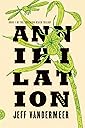
Annihilation: A Novel (The Southern Reach Series, 1)
Product ID: 1357511
Desertcart purchases this item on your behalf and handles shipping, customs, and support to Senegal.
A NEW YORK TIMES BESTSELLER A MAJOR MOTION PICTURE FROM ALEX GARLAND, STARRING NATALIE PORTMAN AND OSCAR ISAAC NOW AVAILBLE IN A SPECIAL NEW TENTH ANNIVERSARY EDITION The Southern Reach Trilogy begins with Annihilation , the Nebula Award-winning novel that "reads as if Verne or Wellsian adventurers exploring a mysterious island had warped through into a Kafkaesque nightmare world" (Kim Stanley Robinson). Area X has been cut off from the rest of the continent for decades. Nature has reclaimed the last vestiges of human civilization. The first expedition returned with reports of a pristine, Edenic landscape; the second expedition ended in mass suicide; the third expedition in a hail of gunfire as its members turned on one another. The members of the eleventh expedition returned as shadows of their former selves, and within weeks, all had died of cancer. In Annihilation , the first volume of Jeff VanderMeer's Southern Reach trilogy, we join the twelfth expedition. The group is made up of four women: an anthropologist; a surveyor; a psychologist, the de facto leader; and our narrator, a biologist. Their mission is to map the terrain, record all observations of their surroundings and of one another, and, above all, avoid being contaminated by Area X itself. They arrive expecting the unexpected, and Area X delivers―they discover a massive topographic anomaly and life forms that surpass understanding―but it's the surprises that came across the border with them and the secrets the expedition members are keeping from one another that change everything. Review: A near perfect read - If Loren Eiseley, Charlotte Perking Gilman, Sigmund Freud, and Franz Kafka had a literary baby, it would look something like Annihilation. In Jeff VanderMeer’s Annihilation, an all-women expedition of four is tasked by a secret organization— the Southern Reach—to explore a mysterious region known as Area X, which has been abandoned/cut off from civilization for decades. They are the 12th such expedition, the last one occurring two years earlier, and it’s made clear very early that those earlier ones had some tragic and/or horrific endings. Not long after arriving, they discover a mysterious underground structure (a “tunnel” to everyone save the biologist, who insists on calling it a “tower”) that, unlike the lighthouse and the abandoned village, is not on their map. Her recording of subsequent events is interspersed with flashbacks to her early professional life and to her marriage. And really, even though all that comes out in just the first few pages, this is all I want to mention about the plot, because much of the pleasure—and it really is a pleasure—is the slow reveal of all that ensues, not merely the plot points but the slow reveal of character as well. And equally, or perhaps even more pleasurable, is what is not revealed. Or maybe more precisely, what is not explained. Suffice to say, this is not a novel for those who like clear-cut answers. Or even, you know, just answers, clear or no (though it is possible, this being the first in a trilogy, that some of the mystery will be made more clear by the end of the entire story). Nor is Annihilation a novel for those who do not care much for unreliable narrators, since the biologist is constantly calling into question not only her own conclusions/speculations, but even her own observations. If she can’t trust her eyes, how are we the readers supposed to? Or whatever theories she comes up with based on whatever it is her eyes see? Now, I happen to be a fan, generally, of unreliable narrators. So I’m already predisposed to like what VanderMeer does here with this character. But beyond that, I just really liked this character herself. If one ignores the whole can’t-trust-what-she-sees part, she has a startlingly sharp vision. This is true when she is looking at the world around her, whether that world is the transitional and partially alien landscape of Area X or the more “mundane” worlds of her youthful backyard, or an empty lot near her house, which are allegedly “comprehensible” to us but have their own inexplicable nature, are themselves part of the fantastical (and as old stories tell us, fantasy is not always benign). And so Annihilation is filled with lots of nature imagery, all of which VanderMeer, who is clearly a sharp observer himself, conveys in vividly precise fashion. Beyond the natural world, though, the biologist also has a clarity of vision with regard to herself, say in terms of her love of solitude, or with regard to her relationship with her husband, that is hard not to like and respond to. Besides the descriptive imagery and the sharp characterization, there is a wonderful sense of dread and suspense, of horror, that builds and builds throughout the novel. It’s that great kind of creepiness that feels so good even as you feel the shadow stretching out over you inch by inch and you know you should run like hell. That kind of hurts-but-feels-good pain of picking at a scab. Between the high level of weirdness that I don’t want to say anything much about, the engaging nature of the narrator and the steadily increasing level of suspense, the book is truly compelling. Not quite in the page-turning fashion of a good mystery or action novel (and then what happens? And then what?) but in the way you just can’t help but look at that flash of movement in the darkness you saw in the corner of your eye, you can’t help but go down that hall, then around that corner. Maybe “fascinating” is a better word than “compelling.” I also was captivated by the questions raised in Annihilation, such as how we view nature, what is our place in this world, how do we respond when we encounter the ineffable? Questions of agency, of influence, of what lies beneath the surface, of how or even if one can remain “alone” in a world that constantly presses upon us and also impresses upon us the requirement to share, to interact, to “connect.” And other ones as well. Craft-wise, I think this is one of Vandermeer’s best novels (and I say that as a fan). The pacing is spot on, the prose shifts gears as needed but generally has a great sense of spare rhythm to it, and shifts between flashback and present time are handled smoothly—he seems to know exactly when to interrupt and when not to, as well as when to return. Finally, it’s exactly as long as it should be and no longer. But the whole is larger than the parts here—yes, I like this book for its craft elements—the prose, the characterization, the tone—and yes, I like it because it tells a compelling story about a likable engaging character. But at the core of Annihilation is something ungraspable, and so it’s also nicely appropriate that I can’t quite nail down exactly what it is I love about this book (as opposed to being able to say what I like about it). But boy, did I love it. Despite being the first in a trilogy, the book ends in such a fashion that I’d be quite happy if this were it. That’s not to say I don’t care what comes next, but despite, or perhaps because of, the enigmatic nature of the climax and the many mysteries left hanging, it’s pretty near a perfect ending in my mind. And pretty much a perfect read. Highly recommended. Review: Love it of Hate it, an excellent read - Others have commented that this book, and the entire series, is somewhat 'ambiguous' and unsatisfying. These are reasonable opinions and are true to a greater or lesser degree depending on where in the series you are and consequently whose narrative you are reading. Some are clearer than others. By the end of the series, a reader will know roughly how the events began, and the origin of some of the entities encountered along the way. One will also know what some of the artifacts introduced in the books mean. Someone who prefers their stories to be all-encompassing or wrap up all loose ends, or even most of them, will be frustrated. Someone who prefers their characters both compelling and easily comprehensible will be disappointed. That is not to say the story does not move, or that *all* the characters are poorly drawn - rather, the reader is limited only to the POV characters provided, not all of whom are, to put it bluntly, that competent. I liked the books, despite being incredibly frustrated by them - VanderMeer stayed just the right side of ambiguity for me. For me, the acid test is a single scene in one of the later books, detailed below (marked SPOILER but nothing really critical revealed). If a reader prefers a chapter or two of coverage of the minutiae of every element of the plot, this book will annoy you to near-violence. Fans of the LOTR books, be warned. On the plus side, the writing is wonderful and creepy, the plot is truly strange but consistent, and the reader has a sense of Much Larger Things happening - which are all the creepier for being only sketched out. SPOILERS IN UPDATED REVIEW BELOW EDIT: having read the series a second time through, my initial criticisms do not hold up. While the actual events of the plot are not as clear as some other works that deal with similar themes, it becomes clear what is happening. The ‘how’ is less clear, but this is a strength - instead of hand waving science fictional technobabble (‘warp speed! Wormhole! Fixed point in time!’) Vandermeer shows us what the characters experience and how they experience it, which makes it both creepier and lends depth to the characters. Enough of the mechanics and evidence are presented to explain the ‘what and how’ perfectly well, with the added bonus that the ‘antagonists’ (if you can call them that) are revealed in a manner that is the single best presentation of ‘alien life’ that I have ever read. Aliens are not humans in weird makeup and society that mirrors human civilizations to highlight the human condition - life is messy, violent and strange and life from somewhere very different will be messy, violent and strange in ways humans will have a hard time understanding. The effort may drive them mad, especially as our own human nature make us probe to petty human emotional responses that overwhelm our ability to recon with something alien. It is more comforting to practice office politics than reckon with an alien intelligence you cannot speak to, reason with, understand or stop.
| Best Sellers Rank | #340,376 in Books ( See Top 100 in Books ) #31 in Post-Apocalyptic Science Fiction (Books) #45 in Dystopian Fiction (Books) #49 in Exploration Science Fiction |
| Customer Reviews | 4.0 out of 5 stars 28,213 Reviews |
B**E
A near perfect read
If Loren Eiseley, Charlotte Perking Gilman, Sigmund Freud, and Franz Kafka had a literary baby, it would look something like Annihilation. In Jeff VanderMeer’s Annihilation, an all-women expedition of four is tasked by a secret organization— the Southern Reach—to explore a mysterious region known as Area X, which has been abandoned/cut off from civilization for decades. They are the 12th such expedition, the last one occurring two years earlier, and it’s made clear very early that those earlier ones had some tragic and/or horrific endings. Not long after arriving, they discover a mysterious underground structure (a “tunnel” to everyone save the biologist, who insists on calling it a “tower”) that, unlike the lighthouse and the abandoned village, is not on their map. Her recording of subsequent events is interspersed with flashbacks to her early professional life and to her marriage. And really, even though all that comes out in just the first few pages, this is all I want to mention about the plot, because much of the pleasure—and it really is a pleasure—is the slow reveal of all that ensues, not merely the plot points but the slow reveal of character as well. And equally, or perhaps even more pleasurable, is what is not revealed. Or maybe more precisely, what is not explained. Suffice to say, this is not a novel for those who like clear-cut answers. Or even, you know, just answers, clear or no (though it is possible, this being the first in a trilogy, that some of the mystery will be made more clear by the end of the entire story). Nor is Annihilation a novel for those who do not care much for unreliable narrators, since the biologist is constantly calling into question not only her own conclusions/speculations, but even her own observations. If she can’t trust her eyes, how are we the readers supposed to? Or whatever theories she comes up with based on whatever it is her eyes see? Now, I happen to be a fan, generally, of unreliable narrators. So I’m already predisposed to like what VanderMeer does here with this character. But beyond that, I just really liked this character herself. If one ignores the whole can’t-trust-what-she-sees part, she has a startlingly sharp vision. This is true when she is looking at the world around her, whether that world is the transitional and partially alien landscape of Area X or the more “mundane” worlds of her youthful backyard, or an empty lot near her house, which are allegedly “comprehensible” to us but have their own inexplicable nature, are themselves part of the fantastical (and as old stories tell us, fantasy is not always benign). And so Annihilation is filled with lots of nature imagery, all of which VanderMeer, who is clearly a sharp observer himself, conveys in vividly precise fashion. Beyond the natural world, though, the biologist also has a clarity of vision with regard to herself, say in terms of her love of solitude, or with regard to her relationship with her husband, that is hard not to like and respond to. Besides the descriptive imagery and the sharp characterization, there is a wonderful sense of dread and suspense, of horror, that builds and builds throughout the novel. It’s that great kind of creepiness that feels so good even as you feel the shadow stretching out over you inch by inch and you know you should run like hell. That kind of hurts-but-feels-good pain of picking at a scab. Between the high level of weirdness that I don’t want to say anything much about, the engaging nature of the narrator and the steadily increasing level of suspense, the book is truly compelling. Not quite in the page-turning fashion of a good mystery or action novel (and then what happens? And then what?) but in the way you just can’t help but look at that flash of movement in the darkness you saw in the corner of your eye, you can’t help but go down that hall, then around that corner. Maybe “fascinating” is a better word than “compelling.” I also was captivated by the questions raised in Annihilation, such as how we view nature, what is our place in this world, how do we respond when we encounter the ineffable? Questions of agency, of influence, of what lies beneath the surface, of how or even if one can remain “alone” in a world that constantly presses upon us and also impresses upon us the requirement to share, to interact, to “connect.” And other ones as well. Craft-wise, I think this is one of Vandermeer’s best novels (and I say that as a fan). The pacing is spot on, the prose shifts gears as needed but generally has a great sense of spare rhythm to it, and shifts between flashback and present time are handled smoothly—he seems to know exactly when to interrupt and when not to, as well as when to return. Finally, it’s exactly as long as it should be and no longer. But the whole is larger than the parts here—yes, I like this book for its craft elements—the prose, the characterization, the tone—and yes, I like it because it tells a compelling story about a likable engaging character. But at the core of Annihilation is something ungraspable, and so it’s also nicely appropriate that I can’t quite nail down exactly what it is I love about this book (as opposed to being able to say what I like about it). But boy, did I love it. Despite being the first in a trilogy, the book ends in such a fashion that I’d be quite happy if this were it. That’s not to say I don’t care what comes next, but despite, or perhaps because of, the enigmatic nature of the climax and the many mysteries left hanging, it’s pretty near a perfect ending in my mind. And pretty much a perfect read. Highly recommended.
M**S
Love it of Hate it, an excellent read
Others have commented that this book, and the entire series, is somewhat 'ambiguous' and unsatisfying. These are reasonable opinions and are true to a greater or lesser degree depending on where in the series you are and consequently whose narrative you are reading. Some are clearer than others. By the end of the series, a reader will know roughly how the events began, and the origin of some of the entities encountered along the way. One will also know what some of the artifacts introduced in the books mean. Someone who prefers their stories to be all-encompassing or wrap up all loose ends, or even most of them, will be frustrated. Someone who prefers their characters both compelling and easily comprehensible will be disappointed. That is not to say the story does not move, or that *all* the characters are poorly drawn - rather, the reader is limited only to the POV characters provided, not all of whom are, to put it bluntly, that competent. I liked the books, despite being incredibly frustrated by them - VanderMeer stayed just the right side of ambiguity for me. For me, the acid test is a single scene in one of the later books, detailed below (marked SPOILER but nothing really critical revealed). If a reader prefers a chapter or two of coverage of the minutiae of every element of the plot, this book will annoy you to near-violence. Fans of the LOTR books, be warned. On the plus side, the writing is wonderful and creepy, the plot is truly strange but consistent, and the reader has a sense of Much Larger Things happening - which are all the creepier for being only sketched out. SPOILERS IN UPDATED REVIEW BELOW EDIT: having read the series a second time through, my initial criticisms do not hold up. While the actual events of the plot are not as clear as some other works that deal with similar themes, it becomes clear what is happening. The ‘how’ is less clear, but this is a strength - instead of hand waving science fictional technobabble (‘warp speed! Wormhole! Fixed point in time!’) Vandermeer shows us what the characters experience and how they experience it, which makes it both creepier and lends depth to the characters. Enough of the mechanics and evidence are presented to explain the ‘what and how’ perfectly well, with the added bonus that the ‘antagonists’ (if you can call them that) are revealed in a manner that is the single best presentation of ‘alien life’ that I have ever read. Aliens are not humans in weird makeup and society that mirrors human civilizations to highlight the human condition - life is messy, violent and strange and life from somewhere very different will be messy, violent and strange in ways humans will have a hard time understanding. The effort may drive them mad, especially as our own human nature make us probe to petty human emotional responses that overwhelm our ability to recon with something alien. It is more comforting to practice office politics than reckon with an alien intelligence you cannot speak to, reason with, understand or stop.
S**D
Gripping Sci-Fi Horror But Little Resolution
The best way to begin a review about this novel (and series) is to tell potential customers what it is NOT. I believe the most enlightening way to do this is to compare it to other prominent sci-fi works with which I feel it has some similarities (and with respect to Mr. Vandermeer many differences). This is not a series by Michael Crichton. Although at times I was reminded of various Crichton works such as the Andromeda Strain, Sphere, and even Jurassic Park, Crichton takes painstaking efforts to ground the seemingly fantastical experiences in his stories with a semblance of fictional science. Crichton essentially is a magician who shows you afterwards how the trick was performed. There is no such reveal in this book (or really the series at large). Any sort of explanation (rational or irrational) is left entirely up to the reader. This can be frustrating for many people (including myself) who become engrossed in the plot and would like a finite resolution. This is also not the book Arrival which also deals with potentially extraterrestrial beings, semiotics, and language. Whereas a linguist is the protagonist and narrator of Arrival, the linguist in Annihilation pointedly drops out of the expedition before the novel even begins. What this book is, as many others have pointed out, is similar to Lost or (in my opinion) Prometheus. The writing, especially at the start, is both exciting and compelling. However, each mystery only leads to more mysteries. The main character is interesting if not rather obtuse (as many characters in sci-fi stories are -- if the crew of the Nostromo could follow simple quarantine procedures then the film Alien may have only been 15 minutes long -- but that's beside the point). As a story, it's well written and the plot is intriguing. It borders on sci-fi horror and raises many interesting questions about the human condition. Hence the 3 stars. But the lack of exposition holds it back.
S**O
so glad I picked this one up
Apparently I purchased this book in 2014. I have no memory of the event (am guessing there was a good deal on it; I had bought the other two volumes in this series as well), but I was scrolling through my Kindle library the other day, looking for something to read, and for some reason, I stopped on this cover. And I have to say, I am glad I did. I read 80% of this book in a few hours one afternoon and finished it the next day. I have not been reading so much lately and that is an unheard of speed for me. I was really into this; I wasn't stopping and checking things online. So, the reading experience was right up my alley. I will add a few other pieces of information before moving on to the substance of the review. This won a Nebula award. I am not always a fan of award-winning books (absolutely could not stand "Among Others" by Jo Walton, for example). But if you are looking for books with critical acclaim, this has it. Also, I am utterly unfamiliar with the television show "Lost" (other than knowing it exists) and other media references from some of the other reviews for this book. I am not sure how to describe this book. It is part ecological monograph, part travel/adventure novel, part personal diary, part character study, even part mystery (not in the traditional sense of solving a murder or some such, but in a sense of people being thrown into an environment they're totally unprepared for and trying to get to the root of some strange phenomena). There are four characters at the start of the novel but we really only get to know one of them, the biologist of an expedition into an anomalous area called the Southern Reach. This book is written from her perspective, in the manner of a personal diary or journal. (One could argue that her dead husband is a fifth character due to flashbacks and the like. We learn more about him than about the mission's anthropologist, at any rate.) Expeditions keep getting sent into this area and things keep going dreadfully wrong -- everyone murdered, or lots of suicides, or people returning completely changed (in terms of personality). We learn a few details of the early expeditions and of the 11th (this book is an account of the 12th), but say 4-10 are still unknown to us. I think I don't mind this. It probably would've been clutter for the author to develop and include seven additional specific outcomes, especially if they weren't directly relevant to the story of this expedition. Early on, the biologist begins to suspect something is not as she has been led to believe. (The members of the expedition received extensive training before leaving on their trip, but serious gaps in the training come to light as the story moves along.) It seems that other members of the expedition are feeling the same, and it causes cracks in the cohesiveness of their unit (which was never super cohesive in the first place -- how can it be if you are not even sharing your names with each other?). But, I don't want to get into too much plot summary. Anyway, this book doesn't have a plot in a traditional sense. There is a lot of exploration through a fascinating environment and I honestly just enjoyed reading the descriptions here, which is not often the case for me. There's not much dialogue though there is a fair amount of introspection and some flashbacks, of a sort. (The flashbacks are well done and serve to further the plot!) There is a climax but it's not the sort of confrontation you might expect at the end of a work of speculative fiction (where there are usually battles and such). The atmosphere created was wonderful. In a creepy sort of way. I also really did like the focus on a single character. This book is a good character study (albeit in weird circumstances). What might cause a person to go on an expedition from which few return? And, the biologist is a good proxy for the reader. She doesn't have all the answers (or really any of them), she is discovering them along with the rest of us. What is it that the higher-ups back home want to know about the Southern Reach? Why are they so adamant that people don't remember how they got into Area X? At the end of this book, we have started forming the questions, and hopefully in future novels we will start getting answers. Minor quibble, but at one point the biologist looks at some cells taken from a non-human mammal (a fox, I think) carcass and looks at them under a light microscope and says they are human. I don't think you could tell one mammal's cells from another using only a light microscope. You could tell cell types (neurons or smooth muscle or skin or whatever) if you were able to properly stain them. You could tell, say, a frog from a mammal (nucleated red blood cells in the frog but not in the mammal). But that is a minor point, and if there was some type of madness or neurodegenerative condition or residual effect of hypnosis affecting the biologist, it is possible she was reporting things that weren't true. Overall, I enjoyed this book very much and am looking forward to starting the sequel, Authority, this weekend!
T**R
An intriguing start to a Lovecraftian horror
Annihilation is the first book in a trilogy about the mysterious Area X, a spreading sentient habitat of unknown origin that has so far been resistant to attempts at scientific exploration or human intrusion. Those who come back (if they do), appear to be shells of their former selves. The book begins by introducing a new expedition team of four women who have already entered Area X. The story is told in the first person by a character simply known as "the biologist". Things get weird pretty quickly as the team comes upon "the tower". Not everyone is thrilled with the idea of exploring it. I'd say one of my complaints is that there really isn't any psychological progression in this novel. The insinuation is that this place changes people, affects their behavior and even changes them physically, but the characters begin the novel a certain way (the psychologist is calculating, the anthropologist is timid, the surveyor mistrustful and guarded, and the biologist wary, but curious) and they pretty much stay that way Granted no one but the biologist really gets that much "screen time" to begin with, but even the biologist only describes physical changes happening to her, and though she muses about whether she is changing mentally as well, there is no significant signs of this by reading her POV. I just thought it was a missed opportunity to ratchet up the horror factor by showing a psychological deterioration as the story progressed. I'm less bothered, as others were, that none of the other women get any sort of back story and are simply defined by their job title and what the biologist tells us about them. I just didn't think it was necessary. After all this first part is basically just an introduction to Area X, the characters are there as a vehicle to allow the reader to explore this strange area, to let one see first hand an example of what happens to one of the many expeditions that have been made, rather than subject the reader to a massive expository dump about the area and the expeditions. I actually wish we got less information about the biologist's back story as, besides some of the stuff about the husband, it wasn't relevant. Was her transformation somehow any different than all the others because she was an introvert with a prior obsession with micro habitats? Eh. The writing is heavy on prose. Luckily, it is mostly well done. The writer is particularly successful in creating eerie scenery. I wish we had seen more landmarks than the underground tower and the lighthouse (perhaps we will get to see the island in one of the other books), as exploring these places and the questions posed by them were the best parts of the book. Because it is the first part in a trilogy, you're not going to get many answers to all the weirdness, though towards the very end, you start to get some idea of what this habitat is actually doing to people, which for me was enough to make me want to read the next installment.
M**S
Eerie, mesmerizing and shudder inducing...horror at its best!
“Desolation tries to colonize you.” For the first time in more than two years, an expedition (the 12th, the group is told) is headed into Area X. The team consists of four women: a biologist (who narrates), an anthropologist, a psychologist, and a surveyor. They’ve got a few firearms, ample supplies, and each have been given a mysterious black device with a glass covered hole in the middle. If that hole glows red, they are to get to a safe place, immediately. They’ve been sent to Area X to uncover its secrets, and perhaps to explain the (so far) unexplainable. Many teams came before them. Some didn’t make it out, and some did, but were irrevocably changed, and worse. Soon after crossing over the border (under hypnosis), they come across a tunnel burrowing straight down into the ground, but what the unnamed narrator can’t help but think of as the tower. Why she can’t bring herself to call it anything but a tower, she doesn’t know, but when the team starts the descent into the tower, they find something very unusual, and ultimately, terrifying. When the biologist comes in contact with an unknown substance, it begins to change her, and she starts to suspect that Southern Reach, the organization that sent them to Area X, may not have the groups’ best interests at heart. Area X is lush, beautiful, and completely abandoned, except for the new expedition, or so they think at first. At dusk, the group hears a low moaning that may or may not be animal in nature, and in fact, mounting evidence points distinctly to “other.” Somehow, the biologist knows that the tower is very important, and that eventually she’ll have to plumb its depths, but first, she’s drawn to the lighthouse that features prominently in many of the previous expeditions’ accounts. It’s there that she discovers evidence of shocking violence, and when she finally goes back to the tower, frightening, and deadly, beauty. Although we never learn the biologist’s name, we do learn a little about her life before Area X, and she soon discovers, within herself, that the control that she’s always been known for is a farce, and it has no place in Area X. In fact, Area X is the very epitome of biology run amok, and yet, for all of its strangeness, it begins to make a chaotic sort of sense to her. The secret lies in the tower, and she knows she must confront it, even if it means her death, and confront it she does, with shocking results. It’s been a long time since a book creeped me out quite this much. It reminded me a bit of The Ruins by Scott Smith, but only in the sense that the horror of Area X is very organic, and the biologist’s descriptions of tidal pools and the organisms that dwell there only served to heighten my terror and fascination. Annihilation is as much psychological study as it is horror, and horror it most certainly is, of the best kind. Vandermeer’s uneasy narrative has that pull that makes you want to go down into that tower with the team, even though you know that would be a very, very bad idea, and he’s created such a fully realized environment, within Area X, that he could certainly go well beyond a trilogy. This is also horror with a bit of a message, although it’s certainly not heavy handed, but it’s there, and it’s a good one. The lighthouse was what did it for me, ultimately. Yeah, the tower is weird and scary and there are things down there that will cause any sane person to curl up in a fetal position and will themselves to die, but it was the silent testament to violence at the lighthouse that really sent chills down my spine. I don’t know why, but for me, monsters are one thing, but it’s horror with a human element that really gets to me the most. I made the mistake of reading this on my Kindle with a light up screen in the dark, and I found myself jumping at any small noise. So, don’t do that, unless, you know, you like that sort of thing (like I kind of do, I admit it.) This was a short read, but it packs a helluva punch. The matter-of-fact narrative (it’s a journal-and she’s a scientist- after all, and Southern Reach asked for maximum context) actually adds to the creep factor of the story, which is already at a 10, although there are passages of uncanny beauty. However, I still got a sense of her sadness, of her conviction that she had nothing to return to, which of course added a melancholy, even fatalistic tone to her story. ANNIHILATION is psychological, and organic, horror and mystery at its very, very best, from a master of his craft. Vandermeer’s ability to create wonder amidst terror is awesome (in the classic sense of the word), and I can’t wait to return to Area X in May with AUTHORITY.
S**H
A fun blend of sci-fi and horror, reminiscent of Lost
This is super short and can be read fairly quickly. I think I did enjoy this more than Borne, but I think it had an added element of horror that sucked me in because horror has sort of always been my go-to genre. We start by meeting expedition twelve. They are traveling to Area X to find out what the deal is with this strange place where no one lives and no one ever really returns from. No one knows each other’s names, because names don’t matter in Area X. So our MC is known as the biologist, but we also have the psychologist (the leader), the surveyor, and the anthropologist. Upon making base camp, the first thing they notice is a strange tower/tunnel that was not marked on the map. This is strange because when they volunteered they were forced to memorize the map and were drilled on it repeatedly. So they decide to investigate and the expedition starts to go badly. There is a lot of ambiguity with this plot. Things are left open to the reader’s imagination and interpretation. Don’t pick this up if you’re going to need definitive answers. Though I never knew her name (it’s an all female expedition) I really enjoyed and related to the MC. She’s an extreme introvert, and fascinated by her work and the workings of ecosystems all around her. There isn’t a whole lot to say about the other characters, you don’t really get to know them very well. The writing was excellent. I appreciate VanderMeer’s style in that he takes the weird and makes it poetic somehow. It’s weird and it’s science fiction and it’s horror but it’s also literary. The setting was really well done. It evokes a spooky, haunted feeling, if for no other reason than the biologist is out traveling the marshy wilderness alone. The pacing wasn’t super fast, edge of you seat thriller style, but it wasn’t slow either and 5 part format made it easy to pick up and put down. I’m definitely going to see the movie- but judging by the trailer it won’t have much in common with the book. I’d recommend this to fans of VamderMeer’s other work, or people who like horror in general.
L**H
Interesting premise, but there is less than meets the eye
This book is extremely patchy. The premise is fascinating, and I was very hopeful at first. A moody scene opens with evocative descriptions and a sense of carefully restrained pacing, as though the narrator is intentionally withholding...something. There is a little conflict early on when the narrator arrives, along with a team of three other women, to investigate a mysterious sort of wasteland called Area X. An early, eerie discovery raises the level of suspense. After a few hints are made at sketching out the characters of each of the four women on the expedition, any hope that the book will explore the relationships among the women as they face dangers and challenges in trying to carry out their mission is quickly extinguished. By the end of the second chapter, this already slow book becomes almost uniformly directionless. It felt as though the author had some big thematic idea to be developed (not necessarily a problem), but the character and plot development are not just undermined but abandoned in favor of this focus on themes. As a result, the whole book comes across as schematic and dull. For me, a key moment came during a very wooden flashback to a fight with the narrator's husband. She explains that he had become frustrated by finding that although she had seemed mysterious and deep early in their relationship, he had not been able to uncover additional layers of her character. She answers him by protesting that there are no additional layers, and that she is only what appears on the surface. I was tempted to give up then, since the author appeared to be making a virtue of his painfully flat central character. I guess I can't say he didn't warn me. And although the book is very unsatisfying, there are some interesting descriptions and a few passages of really fine writing. Given the choice, I would have rated the book 2.5 stars.
K**I
Good book
Came fast and in time. Love this book. Got the soft cover book its 195pages. Amazing book you should definitely order it.
L**O
Mistérios e segredos
Um excelente livro. As perguntas começam logo cedo e continuam vindo. Mistérios se acumulam e você quer saber mais sobre aquele lugar. Não vejo a hora de ler os próximos livros.
A**R
Thrilling
Very good read...with nice detailings of area x...u can visualise every events...very good n short book...experience the thrill...nice writing after jules verne...
F**F
Gripping, different, immersive
This is a very different take on what the reader would consider to be an alien invasion. And it's an hypnotic, spiralling descent into hell. Evocative, mysterious, terrifying, it's impossible to put it down. Little spoiler here: ----- the reader doesn't get all the answers, and that's what I loved as well. You fill the gaps with your own imagination and make up the rest. ----- Also, I'll argue that you don't need to embark into reading the trilogy. As weird as it sounds, this book has its own end and it's perfect. This is a very good, almost dreaming little novel.
M**N
Weird fiction at its finest
When reading 'Annihilation', if you're looking for immediate gratification, you won't find it. This is the sort of book that requires you to dwell on it long after you put it down, teasing out meaning and theme, nurturing their seeds until they blossom. This is weird fiction at its finest. I don't mean "wow, that's a weird book!", I mean the weird fiction genre (if this is your first exposure to it, look it up!). For such a short read it's dense, packed with philosophy, science, horror, you name it. In fact, it's the perfect length, and now that I am nearing the end of book 2, I feel that sequel's larger size makes it feel a bit bloated and meandering. This is a book that demands to be re-read, once, twice, three times, and now that I'm moved onto the sequels, it feels almost a requirement to go back as many things that were only subtly hinted at in this novel are fully revealed or expanded upon in them. A masterful novel for Vandermeer, haunting and memorable. Highly recommended.
Trustpilot
3 weeks ago
1 month ago