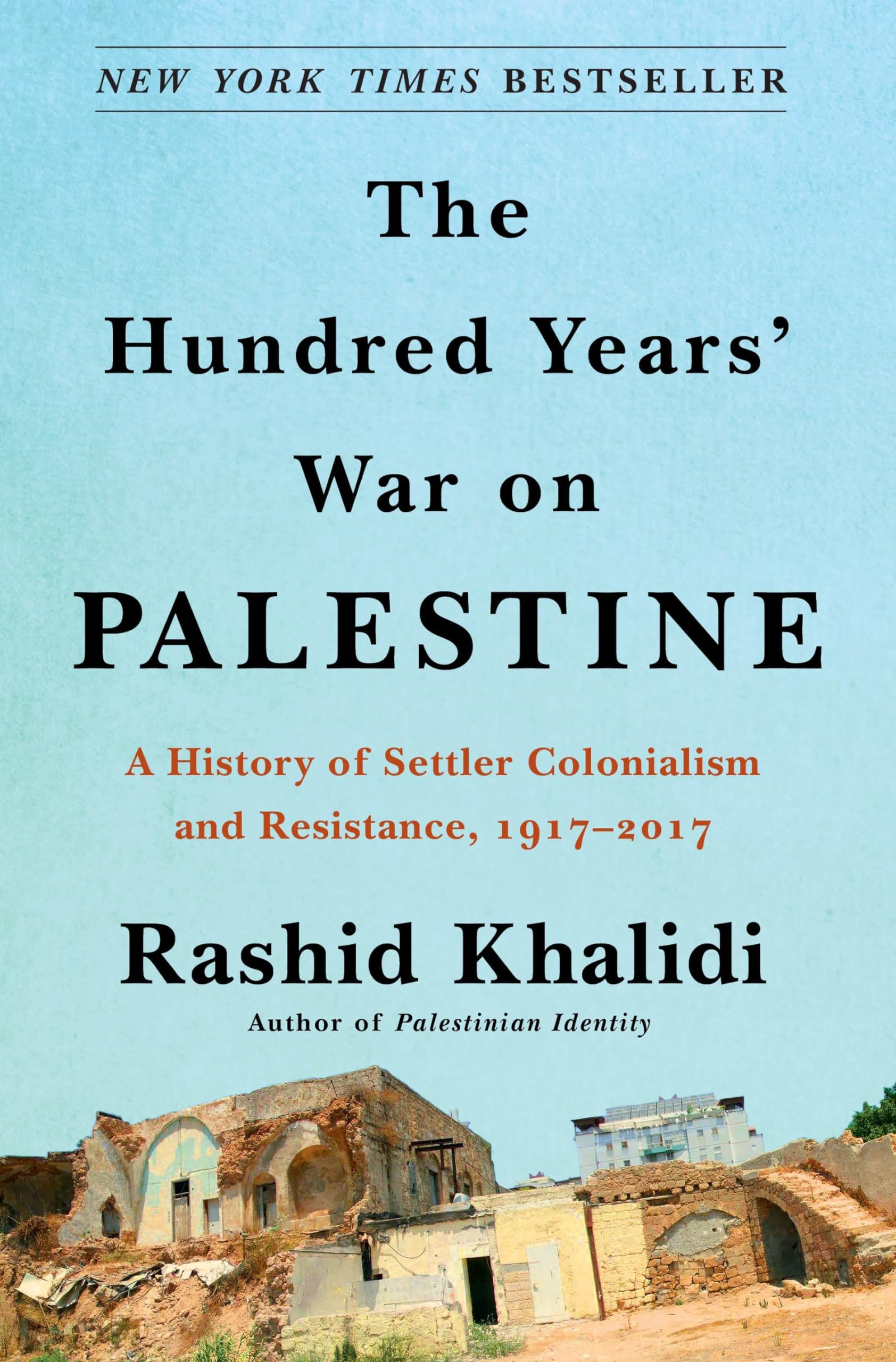
The Hundred Years' War on Palestine: A History of Settler Colonialism and Resistance, 1917–2017
Product ID: 129625238
Desertcart purchases this item on your behalf and handles shipping, customs, and support to Senegal.
A landmark history of one hundred years of war waged against the Palestinians from the foremost US historian of the Middle East, told through pivotal events and family history In 1899, Yusuf Diya al-Khalidi, mayor of Jerusalem, alarmed by the Zionist call to create a Jewish national home in Palestine, wrote a letter aimed at Theodore Herzl: the country had an indigenous people who would not easily accept their own displacement. He warned of the perils ahead, ending his note, “in the name of God, let Palestine be left alone.” Thus Rashid Khalidi, al-Khalidi’s great-great-nephew, begins this sweeping history, the first general account of the conflict told from an explicitly Palestinian perspective. Drawing on a wealth of untapped archival materials and the reports of generations of family members―mayors, judges, scholars, diplomats, and journalists― The Hundred Years' War on Palestine upends accepted interpretations of the conflict, which tend, at best, to describe a tragic clash between two peoples with claims to the same territory. Instead, Khalidi traces a hundred years of colonial war on the Palestinians, waged first by the Zionist movement and then Israel, but backed by Britain and the United States, the great powers of the age. He highlights the key episodes in this colonial campaign, from the 1917 Balfour Declaration to the destruction of Palestine in 1948, from Israel’s 1982 invasion of Lebanon to the endless and futile peace process. Original, authoritative, and important , The Hundred Years' War on Palestine is not a chronicle of victimization, nor does it whitewash the mistakes of Palestinian leaders or deny the emergence of national movements on both sides. In reevaluating the forces arrayed against the Palestinians, it offers an illuminating new view of a conflict that continues to this day. Review: A Definitive and Eye-Opening History of Palestine - The Hundred Years' War on Palestine is the best history book on Palestine that I have read. Rashid Khalidi presents a powerful narrative grounded in meticulous research and firsthand historical insight. He traces more than a century of conflict, colonialism, and resistance, offering a clear, well-documented understanding of how past events shape the present reality. What makes this book stand out is its balance of academic rigor with deeply human storytelling. Khalidi connects political decisions and global forces to the lived experiences of Palestinian families and communities, revealing the ongoing impact of displacement, occupation, and struggle. It’s an essential read for anyone seeking to understand the roots of the Israeli-Palestinian conflict beyond headlines and simplified narratives. Informative, compelling, and deeply moving — truly a must-read for those who want to engage thoughtfully with Palestinian history and the fight for justice and self-determination. Review: Fascinating and well written. But not a complete view of the conflict. - Professor Khalidi's book is passionate and informative and effectively advances his thesis that Israel is a colonial project that has been waging war on The Land's native inhabitants, the Palestinians, for over 100 years. Despite this thesis Khalidi still puts forth the Israeli point of view sincerely. Because of the quality of Khalidi's writing and argument "The Hundred Years' War" deserves 5 stars. However, this book is not a complete view of the conflict - nor does it claim to be. "Hundred Years' War" is short and cannot cover all of the conflict in 260 pages. However Khalidi's glaring rhetorical and historical omissions damage the work's value and venture into dishonesty. Most importantly, Khalidi never addresses the obvious ways that Zionism is vastly different from colonial projects. Furthermore, Khalidi never discusses, even in passing, the 1973 war, Israeli's unilateral withdrawal from Gaza (leaving it virtually entirely self-governed), and Iran's extensive threats against Israel and involvement in the conflict. Finally, Khalidi consistently depicts Israel as a power of almost mythical proportions, a towering behemoth impervious to attack and unfazed by its enemies. This categorization is almost completely in disregard of plain fact. When he discusses the 1948 war in the second chapter of his book, for example, he describes Israeli victory as all but certain, and never mentions that the hostile Arab's states population at the time was 20 million (Egypt) + 1.25 million (Syria) + 430,000 (Jordan) + 1.3 million (Lebanon) + 5 million (Iraq) = ~28 million while Israel's population was roughly 800,000. Khalidi also doesn't mention that the Arabs were far better equipped than the Israelis. The complete lack of mention of these critical facts and countless others severely degrades "The Hundred Years' War" 's value.


| Best Sellers Rank | #122,870 in Books ( See Top 100 in Books ) #8 in Middle Eastern Politics #8 in Colonialism & Post-Colonialism #9 in Israel & Palestine History (Books) |
| Customer Reviews | 4.7 out of 5 stars 5,054 Reviews |
J**E
A Definitive and Eye-Opening History of Palestine
The Hundred Years' War on Palestine is the best history book on Palestine that I have read. Rashid Khalidi presents a powerful narrative grounded in meticulous research and firsthand historical insight. He traces more than a century of conflict, colonialism, and resistance, offering a clear, well-documented understanding of how past events shape the present reality. What makes this book stand out is its balance of academic rigor with deeply human storytelling. Khalidi connects political decisions and global forces to the lived experiences of Palestinian families and communities, revealing the ongoing impact of displacement, occupation, and struggle. It’s an essential read for anyone seeking to understand the roots of the Israeli-Palestinian conflict beyond headlines and simplified narratives. Informative, compelling, and deeply moving — truly a must-read for those who want to engage thoughtfully with Palestinian history and the fight for justice and self-determination.
M**N
Fascinating and well written. But not a complete view of the conflict.
Professor Khalidi's book is passionate and informative and effectively advances his thesis that Israel is a colonial project that has been waging war on The Land's native inhabitants, the Palestinians, for over 100 years. Despite this thesis Khalidi still puts forth the Israeli point of view sincerely. Because of the quality of Khalidi's writing and argument "The Hundred Years' War" deserves 5 stars. However, this book is not a complete view of the conflict - nor does it claim to be. "Hundred Years' War" is short and cannot cover all of the conflict in 260 pages. However Khalidi's glaring rhetorical and historical omissions damage the work's value and venture into dishonesty. Most importantly, Khalidi never addresses the obvious ways that Zionism is vastly different from colonial projects. Furthermore, Khalidi never discusses, even in passing, the 1973 war, Israeli's unilateral withdrawal from Gaza (leaving it virtually entirely self-governed), and Iran's extensive threats against Israel and involvement in the conflict. Finally, Khalidi consistently depicts Israel as a power of almost mythical proportions, a towering behemoth impervious to attack and unfazed by its enemies. This categorization is almost completely in disregard of plain fact. When he discusses the 1948 war in the second chapter of his book, for example, he describes Israeli victory as all but certain, and never mentions that the hostile Arab's states population at the time was 20 million (Egypt) + 1.25 million (Syria) + 430,000 (Jordan) + 1.3 million (Lebanon) + 5 million (Iraq) = ~28 million while Israel's population was roughly 800,000. Khalidi also doesn't mention that the Arabs were far better equipped than the Israelis. The complete lack of mention of these critical facts and countless others severely degrades "The Hundred Years' War" 's value.
P**Y
Great background reference book on Palestine
A great authoritative reference for people seeking to understand the origins of the Palestinian cause and the Arab Israeli conflict.
B**5
Well Written, but One-Sided
It is difficult to find a completely unbiased book on Palestine and this one is no exception. Books supportive of Israel refer to the brave initial settlers and creators of Israel. Books supportive of Palestinians refer to Zionist colonizers, as does this book. The author's inside view of Palestinian activities is very useful and insightful. He tends to paint Israelis as well organized, but with essentially evil intent. He paints Palestinians as virtuous, but lacking effective leadership. A few criticisms that perhaps illustrate the author's bias: 1. The author talks about the grand mufti, Hajj Amin al-Husayni, of the 1930s. He does not describe how in the 1930s al-Husayni visited Hitler, had a tour of at least one Jewish camp, and spoke favorably of this as a possible solution in Palestine. 2. The author dismisses the impact of the "three nos". However, how can there be any peace initiatives with groups that will not even recognize the right of Israel to exist and thus will not negotiate. 3. The author goes into a lot of detail over the 100-year history of this conflict. However, it is surprising that he gives little attention to the "Yom Kippur War". He makes some reference to a "1973 war", but provides no detail. Yet, I recommend this book to open perspective on the issue of the conflicts within Palestine. It is important to read this book in particular if all you have read are books with a pro-Israeli stance. However, if you read this book, I'd suggest that you also read a book with a pro-Israel stance. Is there a book out there from an impartial observer? I haven't found one to date.
D**A
READ IT
A MUST READ for the ignorant!
P**G
Well written and informative book about Palestine without having to wade through propaganda
Well written and informative book about Palestine without having to wade through propaganda
K**A
Honest, emotional, and well-researched
This book completely changed the way I see the history of Palestine and Israel. Rashid Khalidi writes with clarity and compassion — it feels both scholarly and personal. He connects historical facts, family memories, and political analysis in a way that makes the story come alive. It’s not a light read, but every chapter leaves you thinking. If you’re looking for something serious, honest, and deeply researched, this is one of the best books on the topic I’ve read. Highly recommend for readers who want to understand context, not just headlines.
J**N
Painful Truth Well Written
If you feel you want to know the modern history of the conflict between Palestinians and the State of Israel this is a solid choice. In all likelihood, it will change the lens through which you view and understand the conflict and the region. You may end up asking yourself dangerous questions like, "Why haven't I been exposed to this history up until now?" Why indeed. The author is both a historian and someone with personal experience in the region. The book contains the historical and the personal making it a great read. It's painful history to read because it was and remains painful history still unfolding before our eyes. It's not a comprehensive history nor does it claim to be, but if you want an insider's view of the period from 1917 - 2017 this is very much worth the cost of your time and money. This book just might change you. It will surely give you food for thought and raise lots of questions. If you have an opportunity watch an interview with the author online (not hard to find) and you will get his background up front and make your reading richer.
J**A
No creo que haya un libro mejor para entender el problema palestino.
No creo que haya un libro mejor para entender el problema palestino. El autor pertenece a una familia involucrada en el tema desde hace 4 generaciones. Utiliza archivos de correspondencia de su abuelo y bisabuelo con los principales políticos de principios del XX. Su padre trabajó en la ONU. Su tío fue alcalde de Jerusalén. El autor fue negociador por Palestina, en conversaciones con EEUU e Israel. Fue profesor en universidades de EEUU. Del círculo de Edward Said y Mahmoud Darwish. Todo está muy bien documentado. Explica el problema desde 1917, cuando empezaron los ingleses queriendo establecer un estado judío, ignorando en declaración tras declaración que allí vivía el pueblo palestino. Todo el libro es muy iluminador, pero si el lector se cansa e impacienta, no debe perderse de leer el último capítulo, con la historia de las últimas dos décadas. Todo lo anterior también es importante, pero el último capítulo lo estamos viviendo ahora. No es una lectura apasionante. Es un informe muy clarificador, pero a veces un poco burocrático, más interesado en ser exhaustivo que en atrapar al lector. Yo he aprendido mucho, a pesar de ser un tema que llevo dos años siguiéndolo de cerca y leyendo a autores desde diferentes perspectivas.
M**.
Great!
Such a great book. Deep and understandable. It will help you understand the deeply rooted history and what’s behind that history.
S**N
Enlightening
As a born and bred Christian, we were taught to believe that that the never ending conflict in Palestine was due to biblical 'baby's in the old testament. That Israel is a victim of Islamic violence only acting in self defence. This book clears it all. Highly recommended.
M**I
La storia del popolo palestinese e della sua lotta per la sopravvivenza.
Straordinario
R**S
Ok but…
This book gives an interesting perspective from the Palestinian side. There is one absolute question: who are the true natives and the colonists? The author cherry picked facts. Please take the time to read from a Jewish perspective as well.
Trustpilot
1 week ago
3 weeks ago