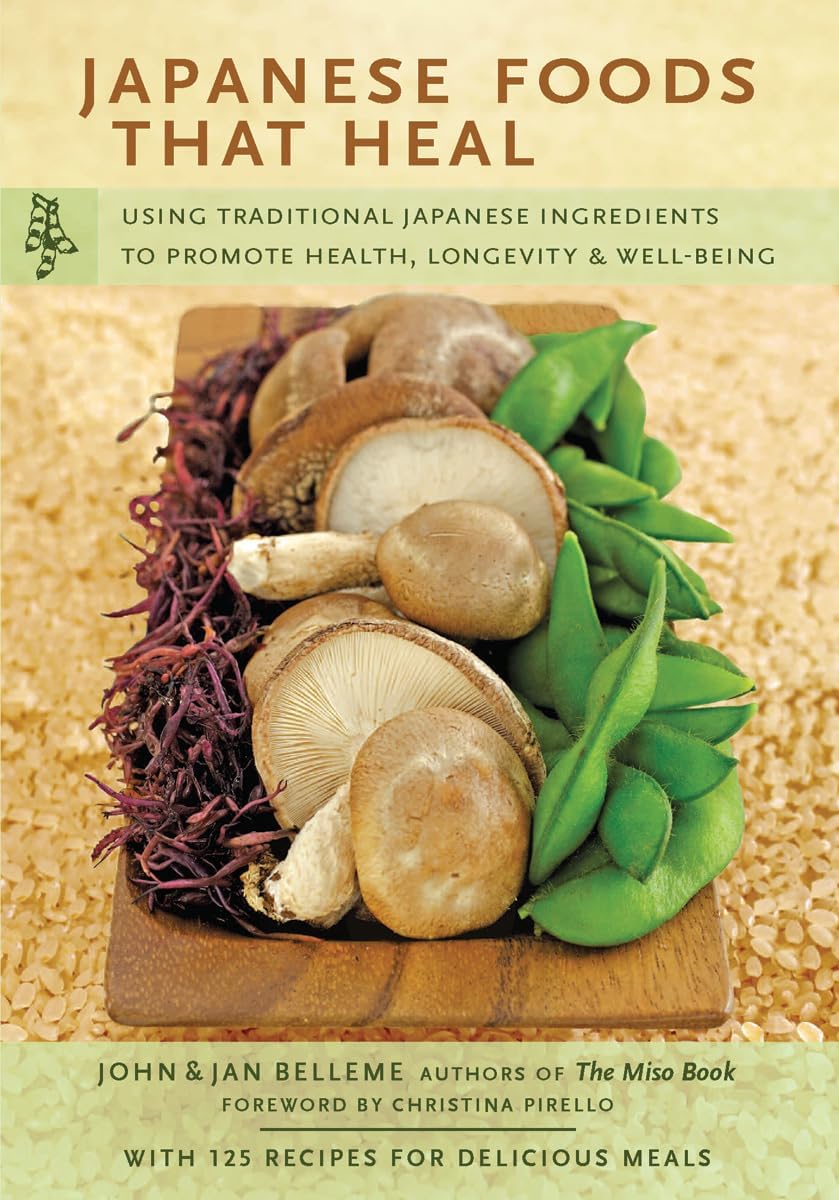
Japanese Foods That Heal: Using Traditional Japanese Ingredients to Promote Health, Longevity, & Well-Being (with 125 recipes)
Product ID: 12269088
Desertcart purchases this item on your behalf and handles shipping, customs, and support to Senegal.
In Japan, the old ways have prevailed well into the 21st century. Small family run shops still make miso, tofu, shoyu, tamari, amazake and other traditional healing foods the same way they were made centuries ago. Perched on ladders, tamari makers gently stir fermenting brew in two-hundred-year-old wood vessels that easily top ten feet. Farmers cultivate shiitake and green tea and harvest sea vegetables according to the ancient, natural ways. These producers use the purest ingredients available and provide superior foods that promote and sustain health. In Japanese Foods That Heal , John and Jan Belleme introduce eighteen essential foods from Japan that are still cultivated and prepared using time-honored methods and recipes. These traditionally made healthy Japanese foods have been proven to cure and prevent degenerative disease, and to prevent premature aging—a fact the Japanese have known for centuries. By stocking up on these healing Japanese foods, your pantry will become a key element of your healthy lifestyle! This healthy Japanese cookbook includes everything you need to know about these healthy and delicious foods—from nutrition and medical facts to recipes and tips for creating wholesome and flavorful meals. You will come to appreciate how each food was produced in years past, how it can benefit your health and well-being, and how it is made today. This collection of recipes shows you how rewarding it is to prepare simple, nourishing meals that both promote good health and please the palate. A pronunciation guide and food glossary demystify Japanese foods that at first may seem exotic to Westerners. And a shopping resource offers practical tips for finding all the foods used in the book. Using this healthy Japanese cooking book as a guide, you will soon learn that the old Japanese saying Isoku Dogen , or "Food is Medicine," is more than a proverb; it is the key to a healthier, more fulfilling life.
| Asin | 0804835942 |
| Dimensions | 7 x 0.7 x 10 inches |
| Edition | 1st |
| Isbn 10 | 9780804835947 |
| Isbn 13 | 978-0804835947 |
| Item Weight | 14.1 ounces |
| Language | English |
| Print Length | 224 pages |
| Publication Date | January 15, 2007 |
| Publisher | Tuttle Publishing |
User
Miracle Foods
This is a superb gem of a book, extremely valuable for the rare nutritional "food is medicine" information it provides concerning 18 different, "traditionally"-made, Japanese ingredients - I know of no other book, including Japanese cookbooks, which provides this unique nutritional information.The appearance of a book containing this unique information is long overdue.The authors are highly qualified to write this unique book, John being a research biologist with extensive (25 years) laboratory experience in medical research at two U.S. universities. Both John and Jan spent over a year in Japan living with a Japanese family and learning how to make miso in the "traditional" way.Japanese medicinal foods produced by "traditional" methods include UNREFINED, FERMENTED, UNPASTEURIZED or MALTED foods, which means that one has to read the product labels or vendor websites VERY CAREFULLY, e.g., on Shoyru, Tamari, toasted sesame oil, brown rice MALT syrup, miso and tofu. Included at the end of the book (p. 221) is an indispensable "Shopping Resources" guide, in which vendor websites are listed. Unfortunately, South River Miso company is not listed: [...] - this company's traditionally-made and unpasteurized miso and tamari are rare and excellent, but this company DOES NOT SHIP ITS PERISHABLE PRODUCTS DURING THE SUMMER MONTHS!Regular Japanese food stores in the U.S. DO NOT carry the "traditionally" made Japanese medicinal foods discussed in this book, but only carry products produced in Japan by modern, INDUSTRIALIZED methods.Each chapter in the book uniformly and consistently follows a standardized analytical format. This book's contents must be read very carefully, particularly the information under each chapter's "Shopping For . . . " entry.This book is not a traditional cookbook. However, some representative recipes are included. The few recipes provided in each chapter are very good ones.These "traditionally"-made Japanese foods have nearly become extinct in post-WW II Japan. However, because of their unique "food is medicine" qualities, these rare foods deserve to make a major popular comeback. Oddly, this comeback is happening in U.S. health-food stores - which are a major export market for these rare Japanese-made foods - rather than in Japan (at least so far).
User
Great Book & Recipes
First, I want to say that I'm friends with the authors of Japanese Foods That Heal. I have the good fortune of enjoying their cooking talents personally....and can say that they are fabulous cooks! Jan and John Belleme were two of the greatest inspirations for me to improve my way of eating and including many of the "power" foods of Japan ~ especially marvelous miso. Miso is a food that everyone would benefit from in their daily meals. Jan and John were founding partners in the first miso company here in the USA, the American Miso Company. John is an awesome "Miso Master." What I like about Japanese Foods That Heal is the wealth of information about many of the healthiest and tastiest specialty foods from Japan ~ from miso and shiitake mushrooms to umeboshi and Japanese teas. I like to learn everything I can about the food that I choose to eat including its history, health and healing benefits and about the people behind the company producing the products I buy. Japanese Foods That Heal is packed with this valuable and inspiring information along with tasty recipes to inspire you into the kitchen to begin enjoying some of the healthiest foods of Japan.
User
Questionably Brand New
This book was wrapped and packaged very well. However, it did not appear "new" as advertised. In very good condition, almost like new would have been more accurate.
User
I love this book!
This book is full of essential information for health and healing. I refer to it regularly. I love how the authors introduce the food, give a detailed description of where it comes from and how to use it, and where one might purchase the item. There is a wonderful resource guide included with a list of retailers and their contact information. I have used it to purchase the items I needed. I have purchased an additional book to give to a family member who also wants a healthier lifestyle. I highly recommend this book.
User
Extraordinary, fascinating everyone should read and us
I ordered two of these books, one to share. The information provided is amazing, so helpful. I feel everyone should read this wonderful book and use at least some of the information,at least on or two recipes for healthy living. Every page astonishes me with precious details, insights and recipes.The sources for pure ingredients is provided at the end of thethe text.How can anyone live without this exceptional publication? I am making it the main source and base for my daily cooking recipes.This book has reshaped my daily life.
User
good stuff.
Easy to use .. healthy way to eat.
User
Great Book
Love it, full of great info on the foods of Japan and the health aspects. I would recommend it to anybody that loves Japanese foods and is interested in getting healthy.
User
Japanese Foods that Heal
Very informative book. I love Japanese foods. I have tried the macrobiotic diet and love it also. The explanations pertaining to the various foods are fantastic. The recipes are very good.
User
A real gem
I'm so glad I came across this book while reading a review of the Miso Book by the same authors. It is really well written, very informative and with recipes that inspire me to want to try cooking them. It doesn't have any colour illustrations, although there are some very nice drawings within. Although I'd normally like those colour pictures, the layout of the book is so user friendly that I'm quite happy without. I can't wait to get started.
User
Japanese Foods That Heal
Very comprehensible, easy to understand why each ingredient of the Japanese foods is good for the health. Unfortunately, I have found an error. Chapter 6 - The Chinese character for kuzu shoud have been 葛, not 甘酒 which belongs to the previous chapter.
User
Ravie
Pour 8,15 euros, je m attendais à un petit livre écrit par IA. Très bel ouvrage en fait
User
good book
Anybody who studies or is interested in Japanese foods will appreciate this book. I study Macrobiotic and personally, I do not regret obtaining it.
User
Five Stars
A really lovely book if your interested in japan and Japanese cooking and healthy living
Trustpilot
2 months ago
2 months ago