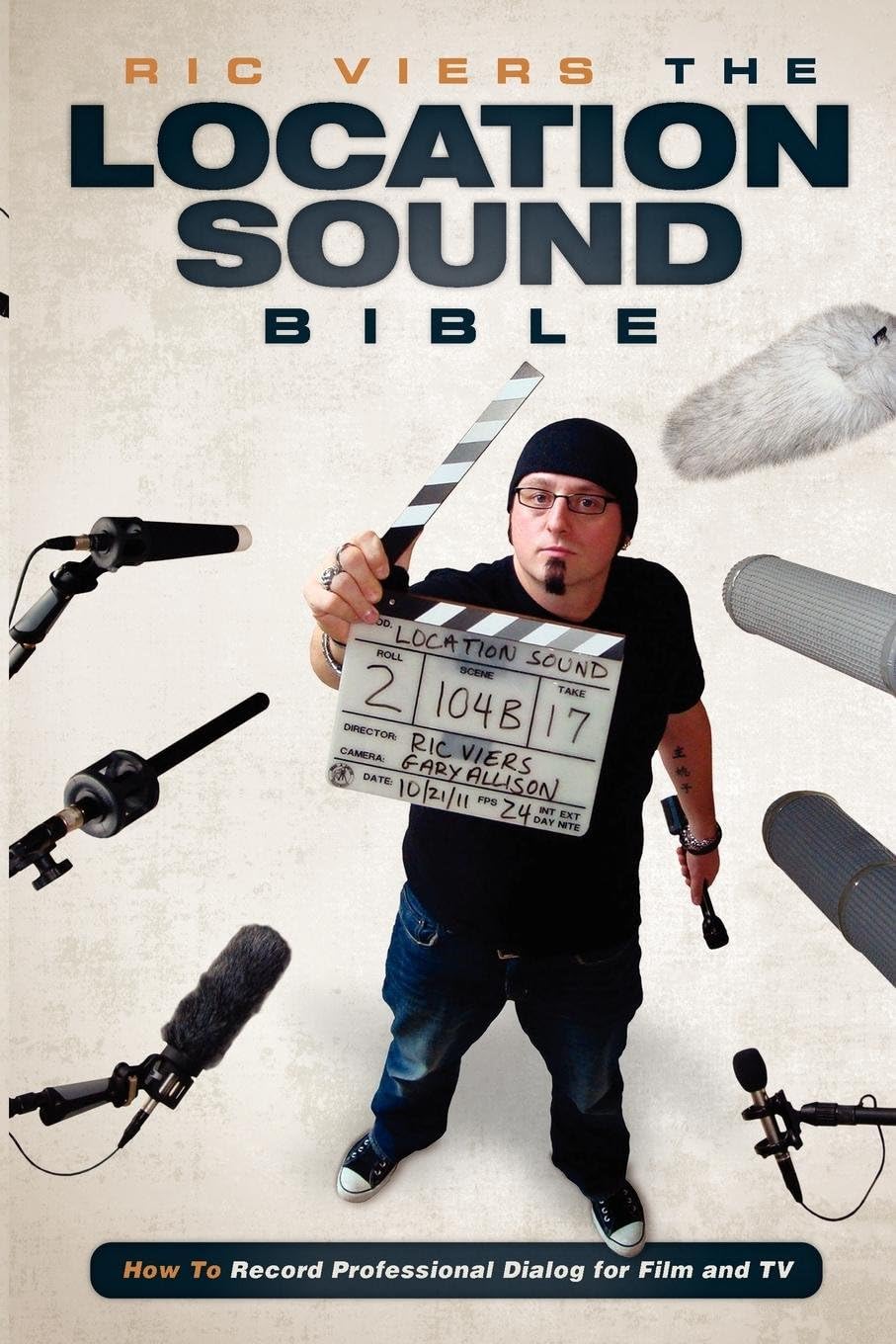
The Location Sound Bible: How to Record Professional Dialog for Film and TV
Desertcart purchases this item on your behalf and handles shipping, customs, and support to Senegal.
Description
The Location Sound Bible is a complete guide to recording dialog on location. Topics include audio basics, microphone selection, wireless systems, recording and mixing techniques, and the Ten Location Sound Commandments, but it’s more than just cables and connectors. This book takes you behind the scenes of Ric Viers’ work on feature films, television shows, broadcast news, courtroom dramas, music videos, and more.
Specifications
| Dimensions | 6 x 0.8 x 8.9 inches |
| Isbn 10 | 1615931201 |
| Isbn 13 | 978-1615931200 |
| Item Weight | 2.31 pounds |
| Language | English |
| Print Length | 426 pages |
| Publication Date | September 1, 2012 |
| Publisher | Michael Wiese Productions |
Reviews
User
Excellent book for Filmmaker who wants to get a hold of sound recording
When I first received the book, it feels a bit daunting because the sheer amount of information and audio terms in the book, but as I read on, the book is really well written, it covers the most important concepts in a concise manner, not too deep or too shallow, just the right amount of information. also the author gave some funny and useful real world examples.To get the best out of this book, I will strongly suggest you will get some basic audio gears in hand first. In my case, I got a shotgun mic, a compact mixer (Mixpre from Sound Device), Zoom H4N recorder, and cables. So when I was reading each chapter, for example, "Mixers", I will have a mixer in hand to play with, this is super important in my opinion. It's gotta be hands-on, without the actual thing to try, you won't really digest the great stuffs from the book. When combined the "read and try" approach, I was able to completely grasp all the major concept and knows in and out of each knob of the my mixer and recorder.And I did my first on location recording two weeks ago, and the sound is pristine quality! Thank you Ric.
User
It's a keeper
This was one of the few books I was forced to buy for class that was worth it. It has good information that's presented and worded in a digestible way. The author knows his stuff from years of experience and has a writing style that doesn't put you to sleep. I felt like I actually learned something and will retain it. If you are interested in location sound recording, it really is one of the best you'll find.
User
Very good and comprehensive sound recording guide
I bought the Location Sound Bible to learn more about properly recording location sound and got a whole lot more out of it!Ric goes into the deep and explains really EVERYTHING there is to know about sound, from the very basic physical characteristics of sound to dB and then on to EVERY aspect of sound recording, the gear, the arts, and the craft, and even into set etiquette!Just be forewarned, Ric is so highly knowledgeable that the Location Sound Bible is A LOT to take in and there might be steam coming out of your brain after reading too much at once! So my advice, take it slow, and dig it :-) !Kudos for Mr Viers!!!
User
Highly recommended for the non-sound professional, hobbyist, or filmmaker just starting out.
Ric Viers has a very inviting, laid back writing style. While this book may contain much the same information you'd find in a textbook, he wrote it as if he were having a pleasant conversation about location sound with the reader. That makes this otherwise dry material a real page turner.I would say that this is a must-read for anyone aspiring to a job as a "sound guy" in the film industry. I'd also recommend it to non-audio film and video professionals so that they can get up to speed on what their colleagues in sound are doing and why.If you're a video blogger or a video making hobbyist like me, I would not only recommend this book, but I'd say it's your duty to pick up a copy. The techniques in this book apply just as well to the affordable (read: cheap) equipment that we all know and love as they do to the high-end gear used in the film industry. I can almost guarantee you'd be better off buying a mic that's $15 cheaper and putting that extra cash towards this book.The book is also from 2012. That means that it discusses equipment that's still current, and that you can buy today (oftentimes right here on Amazon -- but they didn't pay me to say that).My only gripe is so minor that the review doesn't even lose a star: Ric does often repeat himself on certain points. It's probably intentional reiteration to ensure that the reader hasn't missed a key element, however it's noticeable to the point of "breaking the fourth wall". If books had walls. It may not be the best metaphor, but there you have it.I bought the paperback version rather than the digital. The quality of the printing is overall high. The cover has a nice matte feel to it, and inside the paper stock is thick but not problematically so. There are plenty of illustrations and images, but not so many that you'd feel cheated at having bought a picture book.All in all, a great read!
User
I bought this book twice
I teach and work at a college, and I keep this book around to pass to students who show a deeper interest in sound. Then this whole pandemic kicked off, I'm home and my copy is in the bottom drawer of the office desk. So I bought it on Kindle because it's so valuable to have and reference in my work, even from home.Very well organized and thought out. Conversational, with a lot of technical concepts laid out in a relaxing manner. Very much a "bible" containing stories and anecdotes which illustrate the technologies and lessons to be learned. Also the Commandments section is legit.
User
Best read in sound I have found.
Just read the free kindle sample on my Fire and I am hooked. I just bought his book. I have enjoyed being a video producer for a few years and found that the best video work you do is not worth beans if you have bad sound. All those cutaways, special wipes and transitions can't make the audio sound good. That's something I found out the hard way. After having to go back and redub sound on some special events and blues concerts, something that doesn't do the entertainer justice falls squarely on your planning and preparation and knowledge of sound. That is what the free read sample on my fire reminded me of. What I needed to know when I first started to do video work. I am looking forward to read the complete book and know I will find those gems that will help improve my work that much more.
User
How is this not manidtory reading at my film school?
I'm a film student focusing on sound production. The past two years of my education was covered in the first 50 pages of this book. Granted school gave me access to equipment and field hours, but I was floored by how easy it was for sum up everything I've been working on and then to still have a wealth of information to dive into.This book seems to be written in a high school level, which isn't a knock on it. I mean it reads just as conversational as it is technical. Young students would do well to read this if they have any interest in being film makers, or sound recordists.
User
A very worthwhile book
This is a very useful and enjoyable read. It is full of good tips and ideas which will serve both the emerging and novice recording engineer whilst also confirming best practice techniques for the experienced professional. I have been a full time location sound recordist and re recording mixer for over forty years and love books like this which bring new ideas to old dogs. I also lecture to film makers and will not hesitate in recommending this book. Bring on volume two.
User
Complet pour amateur / débutant
Ce livre commence vraiment par la base du son (histoire, technologie, évolution, waveform, etc.) ce que j'ai trouvé très inutile à la limite du remplissage. Ensuite les bases de prise de son, perch, installation de micro cravates, hf etc. Tout est survolé très simplement et aurait pu être beaucoup plus court. Je pense que ce livre est destiné au débutant / amateur avec moins de 2 à 3 années d'expériences sur de petits projets.
User
A really hand guide.
Just what I needed for my film school course, and well laid out too.
User
Manuale ben fatto
Premetto che sono un professionista del suono cinematografico, quindi siamo nel mio campo specifico di competenze.Questo manuale è davvero ben fatto. Semplice, chiaro, non prolisso, ben scritto e anche pieno di consigli di vita su come comportarsi su un set cinematografico, anche se non si è un fonico di presa diretta.Praticamente, se avete un dubbio su come cavarvela in una certa situazione di ripresa del suono cinematografico, cercate il capitolo corrispondente su questo manuale, ed avrete una risposta esauriente al vostro dubbio.Mi chiederete perchè ho acquistato l'edizione originale in inglese: primo, perchè costa molto meno dell'edizione italiana (che non si capisce perchè è in due volumi), secondo perchè amici competenti quanto me sulla materia mi riferiscono che la traduzione è di bassa qualità.Questo manuale, inutile dirlo, è pieno zeppo di termini tecnici specifici e di gergo che non si possono tradurre letteralmente, ci vuole una conoscenza delle procedure e delle apparecchiature utilizzate nella professione del fonico di presa diretta.
User
básico pero bueno
un bue libro para todos aquellos que quieren empezar dentro del sonido directo. Habla muy bien sobre cosas basicas del oido, asi como manejo del kit de sonido: caña, grabadoras, etc. un "must have" dentro de tu biblioteca si te dedicas al sonido, al cine o al diseño sonoro en tv y cine
User
Muito esclarecedor.
O livro para quem trabalha com áudio realmente é uma mão na roda, aborda vários assuntos que tiram a dúvida de qualquer pessoa da área.
Common Questions
Trustpilot