Buy anything from 5,000+ international stores. One checkout price. No surprise fees. Join 2M+ shoppers on Desertcart.
Desertcart purchases this item on your behalf and handles shipping, customs, and support to Senegal.
📷 Elevate your creativity with the DSLR that fits in your palm!
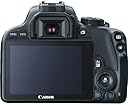
The Canon EOS Rebel SL1 is the world’s smallest and lightest DSLR featuring an 18.0MP APS-C CMOS sensor paired with a high-speed DIGIC 5 processor. It offers a 9-point autofocus system enhanced by Hybrid CMOS AF II for fast, accurate focusing in both photos and Full HD 1080p video. The 3.0-inch touchscreen LCD with smudge-resistant coating provides intuitive control, while silent STM lenses deliver smooth, quiet autofocus—making it ideal for professionals and enthusiasts seeking portability without compromising image quality.
| ASIN | B00BW6LY2Y |
| Age Range Description | Adult |
| Aperture modes | F3.5–F5.6 |
| Are Batteries Included | Yes |
| Aspect Ratio | 16:9 |
| Auto Focus Technology | Center, Continuous, Contrast Detection, Face Detection, Live View, Multi-area, Phase Detection, Selective single-point, Single, Touch, Tracking |
| Autofocus | Yes |
| Autofocus Points | 9 |
| Best Sellers Rank | #160,090 in Electronics ( See Top 100 in Electronics ) #247 in DSLR Cameras |
| Bit Depth | 14 Bit |
| Brand | Canon |
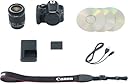
| Built-In Media | Battery Charger LC-E12, Battery Pack LP-E12, Camera Instruction Manual (Not shown), EF-S 18-55mm f/3.5-5.6 IS STM lens, EOS Digital Solution Disk & Software Instruction Manual CD, EOS Rebel SL1 Body, Eyecup Ef (Not shown), One Year Limited One Year Limited Warranty Card, USB Interface Cable IFC-130U, Wide Neck Strap EW-300D |
| Camera Flash | Built-In |
| Camera Lens | 18-55mm STM |
| Color | Black |
| Compatible Devices | Computers (via USB) |
| Compatible Flash Memory Type | SDHC, SDXC |
| Compatible Mountings | Canon EF, Canon EF-S |
| Connectivity Technology | HDMI, USB |
| Continuous Shooting | 4.00 |
| Crop Mode | APS-C |
| Customer Reviews | 4.5 out of 5 stars 432 Reviews |
| Digital Scene Transition | False |
| Digital Zoom | 1.00 |
| Digital-Still | Yes |
| Display Fixture Type | Fixed |
| Display Maximum Resolution | 1040000 dots |
| Display Resolution Maximum | 1040000 |
| Display Type | LCD |
| Dots Per Screen | 1040000 |
| Effective Still Resolution | 18 |
| Expanded ISO Minimum | 100 |
| Exposure Control | Automatic |
| File Format | JPEG: Fine, Normal (Exif 2.3 compliant), Design rule for Camera File system (2.0),, RAW: 14bit RAW, Digital Print Order Format [DPOF] Version 1.1 compliant |
| Flash Memory Bus Interface Type | 9-pin |
| Flash Memory Type | SD/SDHC/SDXC |
| Flash Memory Video Speed Class | V60 |
| Flash Modes | Auto, Manual |
| Flash Sync Speed | 1/200 sec |
| Focal Length Description | 18-55mm |
| Focus Features | TTL-CT-SIR, Hybrid CMOS AF II |
| Focus Mode | Continuous-Servo AF (AF-C) |
| Focus Type | Manual Focus |
| Form Factor | Compact SLR |
| Generation | 1 |
| Global Trade Identification Number | 00013803222654 |
| HDMI Type | Type C Mini HDMI |
| Hardware Interface | AV Port |
| Has Color Screen | Yes |
| Image Capture Type | Stills & Video |
| Image Stabilization | No |
| Image stabilization | No |
| Item Weight | 13.05 Ounces |
| JPEG Quality Level | Basic, Fine, Normal |
| Lens Construction | Aspherical, UD |
| Lens Correction Type | Image Stabilization |
| Lens Type | medium-telephoto |
| Manufacturer | CANU9 |
| Manufacturer Part Number | 8575B003 |
| Maximum Aperture | 5.6 f |
| Maximum Focal Length | 88 Millimeters |
| Maximum Image Size | 18 MP |
| Maximum Shutter Speed | Jan-00 Seconds |
| Memory Slots Available | 1 |
| Metering Methods | Multi, Center-weighted, Spot, Partial |
| Minimum Focal Length | 29 Millimeters |
| Minimum Shutter Speed | 30 seconds Seconds |
| Model Name | Canon EOS Rebel SL1 |
| Model Number | 8575B003 |
| Model Series | Canon EOS |
| Movie Mode | Yes |
| Night vision | No |
| Number of Diaphragm Blades | 7 |
| Optical Zoom | 3.1 x |
| Photo Filter Size | 58 Millimeters |
| Photo Filter Thread Size | 58 Millimeters |
| Photo Sensor Resolution | 18 MP |
| Photo Sensor Size | APS-C |
| Photo Sensor Technology | CMOS |
| Real Angle Of View | 63.4 Degrees |
| Recording Capacity | 29 Minutes |
| Remote Included | No |
| Screen Size | 3 Inches |
| Self Timer | 7 Seconds |
| Sensor Type | CMOS |
| Shooting Modes | Still photo shooting and video shooting |
| Skill Level | Professional |
| Special Feature | Lightweight |
| Specific Uses For Product | personal |
| Supported File Format | JPEG: Fine, Normal (Exif 2.3 compliant), Design rule for Camera File system (2.0),, RAW: 14bit RAW, Digital Print Order Format [DPOF] Version 1.1 compliant Supported File Format JPEG: Fine, Normal (Exif 2.3 compliant), Design rule for Camera File system (2.0),, RAW: 14bit RAW, Digital Print Order Format [DPOF] Version 1.1 compliant See more |
| Supported Image Format | JPEG, Other, RAW |
| Total Still Resolution | 18 MP |
| Total USB 2.0 Ports | 1 |
| Total USB Ports | 1 |
| Touch Screen Type | Yes |
| UPC | 013803222654 |
| Unit Count | 1.0 Count |
| Video Output | HDMI |
| Video Resolution | FHD 1080p |
| Viewfinder | Optical |
| Viewfinder Magnification | 0.87x |
| Warranty Description | 1 year coverage for labor, 1 year coverage for parts |
| White Balance Settings | Auto |
| Wireless Technology | EyeFi |
| Write Speed | 4.0 fps |
| Zoom | Optical Zoom |
J**J
Excellent camera for the price
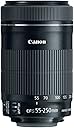
I'm primarily a Leica M shooter, but need a backup camera with autofocus and macro/tele capabilities. For a long while that camera was a Canon 1DsMkII, but I decided to go the Sony A7II route and got rid of that body and all my Canon glass last spring. There were some things I didn't like about that system (not an EVF kind of guy) even though on paper it was great. I wanted to get something inexpensive because I really only need this type a camera a few times a year. After trying a couple of different Panasonic bridge cameras, I decided to give the SL1 a shot. Amazon had good package deal on the body+kit lens and the 55-250 STM lens with some various extra stuff thrown in. Everything shipped in separate boxes and the USPS of course lost the box with the actual camera in it. Amazon eventually sent me a replacement, but only after giving me the runaround for a couple of days, including one CS rep who was supposed to have processed the replacement (which I have in writing in a chat) but never actually bothered to, which created another day of delay. Eventually the replacement camera finally did show up and after take a bunch of indoor and outdoor test shots, I couldn't be happier with it. It's shockingly compact for an actual SLR with a mirrorbox and the ergonomics I think are quite good. The dedicated ISO button is in a good spot near the shutter release and the touchscreen makes interacting with the UI very easy. I think the image quality is excellent for a camera of this price point. With a little noise reduction in LR even ISO 3200 is very usable. AF is fast (although I only use the center focus point) and shutter sound is decent. The kit and 55-250 lenses, although made completely of plastic still seem well made, although how much would a metal mount have really added to cost? The focus motors in the STM lenses are almost completely silent and are very quick. The tele zoom is very sharp and the bokeh is actually pretty nice. I like that the front elements on both lenses don't rotate as you rack in and out. That's convenient for using a ring flash. Not really much more that I can say that hasn't been said in many other reviews, but I have to say I'm completely satisfied with this camera for the intended purpose.
W**N
Better than the 7D!
This is currently the best crop sensor camera you can buy right now. It's odd, because it's also one of the cheapest DSLR's Canon sells, but the nature of the game, is that Canon introduces the best technology into their more expensive lines first, the 7D in 2009, for example. The same sensor technology and advances has then been put into each successive camera, the T3i, the T4i, the 60D, etc., and finally, it has trickled down into the Eos SL1. Having used the 7D, the 60D, and the SL1, I can say the SL1's user friendliness and ease of use is up with the 7D, and indeed better than the 60D or the T2i (haven't used T4 or the new T5). Another strange thing about Canon, is they'll sometimes put really neat features into their lower end cameras to kind of see how they work out, as a test of sorts. The reason I say the SL1 is better than the 7D is the 7D had the digic 4 processor while this has the digic 5 processor. sensors being even identical, the better processor will enhance noise reduction in low light shooting, and the speed of the processor being 6 times faster adds to snappyness all around. The SL1 does indeed have a touch screen, and actually, it's very useable, close to using an iphone in touch sensitivity, and the beauty of Canon's design is, you can turn it OFF, and you can navigate all the menus without using it at all either, which is something very important to me. I don't want my nose hitting the screen to suddenly change a setting while looking through the viewfinder, or maybe i want to save that extra bit of battery life, etc. it is indeed small, and my only real beef with the SL1 is that while the whole point of it is it being small and portable as all heck, my hand wants just a little bit more depth in the grip itself. otherwise, a perfect little camera. I'm sure some third party vendor is going to come out with an extension grip, or one of those hand strap accessories to remedy this. I wear glasses, and this viewfinder will be smaller than a 5DmkIII or 7D, and again don't like my nose smashing on the screen, so, I HIGHLY recommend the EP-EX15II extender for the viewfinder. Just look it up on amazon. it makes using the viewfinder infinitely more useable, and it's a very inexpensive accessory. That being said, I think Canon has a winner on their hands. I will take the SL1 + 40mm pancake combo over the FujiX100S or even Canon's G1X, or any other compact, 4/3's, or other 'lightweight' body camera. This is the one to beat! people complain about the 'only one cross-type' sensor, but I've found the autofocus points to be speedy and smart and accurate. The only time this should even be an issue is when holding the camera vertical/portrait mode, but what I tend to do is half-press to focus the center point where I want focus, and then compose the shot with button still pressed, then push all the way to take the shot. even with 20 cross-type focus sensors, you're better off just using the center to get focus anyways. At least, that's how I shoot. One other caveat is you should get at least one STM lens for this body. The kit lens is probably good, I didn't get it, the 40mm STM is a beautiful lens, perfect wide open, so at least get one STM lens, so you can appreciate the very fast focus speed and better autofocus during video shooting. An STM on this body makes autofocus during video actually possible and useable! a feat Canon had not accomplished until now.
D**N
Very good camera for those with hands small enough to hold it comfortably
The Canon Rebel SL1 is a great camera. It pretty much takes the majority of features of a T5i and crams them into a smaller body. Image quality is very good (though possibly not as good as what Nikon offers at this price point), and the camera is very responsive. Its biggest asset, though, is its size. It really is tiny. And light. It's hard to imagine how the workings of an SLR camera can be fit into something so small and lightweight. Its biggest liability, though, is its size. It really is tiny. If you've got larger than average-size hands (or maybe even average size hands), it may be a little uncomfortable to hold it. The hand grip doesn't go very deep, so larger fingers have no comfortable place to go. My hands are pretty normally sized, if not slightly smaller than normal, and I found the camera to be just a bit uncomfortable to hold for long periods of time. Certainly not because of the weight. But because I never could get my hands into a position that really fit properly. The grip just isn't quite big enough to be the right fit. I may be spoiled because normally I shoot with a Canon 6D or 70D, which fit my hands very well, but the SL1 never feels quite right. But for someone with small hands, or someone who is looking for a tiny SLR, the SL1 is great. Just make sure to try one on for size before purchasing to make sure it is something you can work with comfortably.
P**J
Excellent Camera
We purchased this camera as a backup body and lightweight addition as an alternative to our Canon EOS 70D and EOS 6D cameras. My wife and I are semiprofessional photographers. Pros: 1. Very small but still easy to use in relatively large hands. 2. Light weight. 3. Excellent results with typically smooth Cannon pictures that compare very well with the 70D at the default settings. 4. Takes all our EF-S lenses. 5. Excellent ergonomics. Controls in just the right place and anyone familiar with the Canon EOS series should be able to operate it efficiently without reference to the manuals. 6. Fast and accurate focusing. 7. Low light performance matches 70D with quick and accurate focusing in very low light. 8. Good build quality. It is plastic, but it is solid and does not 'creak'. Not quite as good as Nikon equivalents e.g. D60, D3200 etc. 9. 18 to 55 mm STM kit lens has virtually silent focusing. 10. Touch screen works beautifully. Cons: 1. Supplied 18 to 55 mm STM kit lens is rather large for the camera and makes it difficult to carry. Optional 40 mm STM lens is much more compact but obviously not as flexible. New Nikon 18 to 55 mm lens shows the way forward with its collapsing lens barrel for carrying. I also do not like the plastic mount on the 18 to 55 mm kit lens since they wear and can be damaged easily. The optional 40 mm lens is a metal mount which is much more robust. Only and issue if you swap lenses frequently. 2. The obvious compromise that some of the more esoteric settings are buried in menu items rather than as buttons for direct control but the touch screen mitigates some of those misgivings. 3. Larger lenses make the camera unbalanced in the hand. No obvious way around this as this is a result of the small size. You cannot have small size and light weight but expect it to be OK with larger heavier lenses. Overall a very nice camera and would make a superb entry point to the Canon range of EOS cameras. Careful choice of lenses is important in order to make sure the camera handles well.
J**D
Not just for beginners
The Rebel series is target-marketed to beginner photographers; however, this camera shares many of it's parts and features (sensor, DIGIC 5 processor, advanced auto-focus system, etc.) with much more expensive Canon models. All these turn to very powerful tools in the hands of a capable photographer. The photo quality is amazing; the LCD is extremely useful both in display and in touch screen capability. Superb ergonomics mean the user can concentrate on making photos versus fiddling with the controls. Canon's wide range of lenses is a big plus. Yes, the smaller, crop, sensor may cause more noise in low light conditions, but you can shoot in RAW format and use the included Canon software to remove most of it. Above all, the camera is very light and small (much more usable that the big bulky "full frames", although long lenses will somewhat negate this advantage). This means you will carry it with you more often and get more photos ; as someone said : The best camera is the one you have with you! My opinion: If you choose to get this superb camera, consider buying it in kit form (with the excellent kit lens). Then spend some time and a little money on photography education. Learn to use the manual mode, shoot in RAW and convert/edit with the very capable, and unfortunately under-rated, Canon DPP software. As next steps, slowly acquire useful accessories, like a powerful flash, a good tripod, light reflectors, a remote release and filters (like a circular polarizer). Finally, graduate to some prime lenses, like the amazing Canon 40 mm f2.8 with STM. You may be generously rewarded
R**N
A GREAT small camera: no more EVIL or MILCs for me!
I've gone through a few micro-4/3'rds and Sony NEX cameras, and have been basically displeased with all of them. Either the lens choices are less than ideal (hello, Sony), the upgrade cycle is way too long (hello, Oly and Panny) -- or maybe it's just that for "real" photography I use the big-boy Canons (1d and 6d) and value the ability to have one pool of lenses and flashes. Whatever the root cause, this thing is now always in my work backpack. It's small enough so that I don't mind hauling it around, and the quality is good enough for my needs. I own a few STM lenses at this point. The 18-135 STM is my favorite: very light, great range, and great images. The 40 STM pancake is too tele for general use, and too wide for portraits. It's a lens cap at this point! I'm keeping the 18-55 STM for a while for those "really light" days, but its not going to be heavily in rotation. And my favorite lens, believe it or not? The 8-15 circular fisheye zoom. Great results, and a pleasure to use. Oh, and the touchscreen is stonking brilliant! I almost fainted the first time I swiped, pinched and zoomed a picture on playback. Tapping to focus is also a blast. Call me an old dog, but that's one trick I learned very quickly.
D**O
better than my last camera
I bought this camera to replace an older Canon full-frame digital SLR that I have had for too many years...it was a very reliable camera but it was very heavy...I was looking at the T5i and T4i and even considered going to the 6D...This camera body came up on special for one day only for about $360 and I figured I would give it a test drive just to see if it would be worth it after reading some very positive reviews...after testing it out, I love this camera...maybe it doesn't have all the features of a T4i or even T5i but honestly, I don't really need those other features...It definitely has a lot more features than my last full-frame camera...First thing I wanted to test out was my old and trusty lenses...with the exception of one lens, they all worked without a hitch...I then wanted to test out some bokeh shots simply because it was Christmas...my shots were fantastic...took some family pics and found some really helpful, nifty features that make taking a family Xmas pic profoundly easy...my last camera could only do one pic at a time on a timer...I was taking 8 at a time with this one...it was very important because I have young kids and they move around a lot...it worked exactly as I needed it too...saved me so much time...so far, I am very happy with this purchase as it was low in price and is keeping me very happy...it has absolutely no problems working with high ISO's and the focus is really quick...I didn't want to buy it with the lens that comes with it but was very worried that it might not work with my lenses...my fears are put to rest... I feel like I could carry this camera around all day with no problem...the light body is truly an asset...I think the major point of this camera is that it is smaller and lighter than the other cameras and Canon is trying to use it to compete with the mirrorless systems that have come up (Canon makes one too)...I don't like the mirrorless systems myself and have been using a Canon G1X for a while now and I much prefer that camera to the mirrorless ones...but I did miss using my DSLR very much due to the versatility it offers...this suits me just fine...I am a hobbyist, not a professional and can not always afford full-frame DSLR's (even though they are much cheaper than my last DSLR!)... If you are a complete pro, this may not be the camera for you...but if you are like me, and are looking to upgrade from an old system, I would recommend this camera as it won't break the bank...you lose a little with the cropped sensor but if you know what you are doing, you will get accustomed to it very quickly...if you absolutely need those extreme wide-angle shots, you may need to spring for a full-frame...but if you just want to take family pics, sports pics, landscapes and macros, this will work just fine... by the way, this camera takes amazing pictures with prime lenses... Update: Still love the camera but it really lacks in taking pictures up close...so I use a 50mm prime (80mm equivalent) but I have to be about two feet away from my subject...so in order to get the picture I want, I have to use an 85mm lens...no big deal but not as functional as I wish it could be...there is a Macro setting on this camera but I haven't been able to use it effectively or efficiently with my smaller lenses...I am used to taking pictures within a foot if I want to...not a deal-breaker and it actually helps my creativity by making me think in a different manner but I still think it would be nice to have a closer range to shoot with...so if you are looking for macro, I wouldn't recommend this camera unless you are using an 85mm macro or higher...I think the distance to the lens elements from the sensor is a bit closer than in the slightly bigger cameras (T4i, T5i) and that is one of the trade-offs of making this one smaller...for the most part, this camera still rules but as I had said previously, if you are a pro, this may not be the camera you want anyway...I can't wait to take this to Washington D.C. later this year and snap to my hearts delight...
D**Y
Best combination of image quality, viewfinder, and size
I am impressed with my new Canon SL1 with the 18-55 kit lens. As a long time dedicated amateur photographer with a shelf full of other equipment, including fancier and much more expensive equipment, this will now be the one I take with me and use most of the time. Here's why: * Incredibly small and incredibly light. The biggest single reason for the recent spate of mirrorless cameras (Sony NEX, Fujifilm X) is now negated! I am sitting here looking at the SL1 next to my Fujifilm XE-1 with a comparable 18-55 zoom lens. The SL1 is lighter and smaller than the Fuji mirrorless camera with its electronic viewfinder. The SL1 optical viewfinder, while more compressed than the one in a large high-end DSLR, to my eyes is still far superior to any electronic viewfinder, which is like looking at a fuzzy little television from the 1960's. Canon appears to have achieved the small size by repackaging the sensor and shutter; impressive engineering and I expect that Nikon and others will have to follow suit. Let's hope we will now see a new generation of tiny DSLRs. *Image quality: OK you say, it's small. So what am I giving up? Answer is - not really much. Image quality is excellent. The electronics of sensors have advanced rapidly in the last few years and the newest entry level camera is going to perform better than the high end product you bought two years ago. And new half frame sensors may be comparable to full frame sensors from a few years back. Also, the entry level DSLR market is the most competitive. Nikon (D3200) and Canon (SL1 or T5) are forced to give you more for your money than with high end full frame cameras. The SL1 is a bargain. Yes, you can get a marginal improvement in images and controls by going up market, but you will pay 3X as much in dollars, and in weight, and in volume. The cost of any technology is usually on a log scale; 90% of state of the art costs X and 95% costs 3X and 99% costs 9X. It makes no sense to ride this curve unless you do very specialized or commercial photography. For most of us, the most important thing is whether we have the camera with us when the photo opp comes up. *Comparison. The images coming out of this Canon SL1 are lovely, contrasty and with excellent colors. I compared directly with my full frame Nikon D600 and also Sony NEX 6 at ISO 400. Results; unless you are a fanatical pixel peeper, they are all in the same ballpark. Only by blowing up the central 10% to fill the computer screen can one begin to see significant differences. If you do make this extreme blowup, the full frame D600 had the cleanest, lowest noise, and finest detail. But then the D600 costs 4X the SL1 and weighs more than twice as much! And anyway, does it really matter if some other sensor is s-l-i-g-h-t-l-y better? No it doesn't. Having the 'best' equipment is just not the determining factor in capturing beautiful photos that I will take pride in years down the road. The SL1 gives me 90% of the quality I will get from any camera anywhere at 1/4 the cost of a high end DSLR. The main difference is that the viewfinder is cramped and the settings are in menus rather than dedicated buttons. Big deal. You can still do any creative thing you want and win photo contests with this camera. *How about the kit lens?: Just fine. By profession I am interested in the details of lens design and I admire beautiful finely crafted Zeiss lenses just as much as as the next fanatic. But as a photographer I can tell you that for actually capturing once-in-a-lifetime handheld photo opportunities with a sharp high quality image, there are two things that matter much more than ultimate optical quality: a) image stabilization and b) zoom so you can scale the desired image to fill your sensor. Are high quality prime lenses "better?" In practical terms, usually not. For most photography, they will not produce a more detailed image unless your camera is on a tripod and the scene just happens to be matched to the focal length. For general opportunistic or travel photography, squeezing out the last iota of lens quality is close to irrelevant. This is especially so these days when the camera JPG engine corrects typical lens defects such as distortion and chromatic aberration automatically. Modern lenses no longer have to be perfect in the glass; they all end up pretty much alike after the software corrections are applied. This is also why spending hours diddling around with RAW images in Photoshop no longer makes much sense for most of us - the JPEG engine has been programmed to optimize the specific lens - and it will take much time and skill to equal or improve on this on one's own. Today, post processing is not optional so JPEG is how cameras should be judged. Image stabilization in particular has a lot more to do with sharpness for handheld photos then ultimate lens quality. The stabilization on this Canon lens works fine, showing its best advantage with shutter speeds around 1/10 to 1/25 second and giving effective reduced jitter as if you were shooting at 1/200. (If the required exposure is much slower than 1/25, let's say 1/5 or slower, even IS will not help - and if it's much faster, don't need IS and it won't improve anything.) And as noted, using a zoom has a lot bigger impact on quality then the niceties of a prime lens because one doesn't need to crop down. If I crop to the central 1/4 of the image area because my lens did not frame the scene optimally, I am throwing away 3/4 of my pixels, so I no longer have 18MP anyway. Overall results will be better with a zoom, even if it's optically imperfect. *So is mirrorless no longer needed? There is one factor which does still favor mirrorless over SLR; the size of lenses, which are limited by the laws of physics and the long flange-to-sensor distance that comes with an SLR mirror. For the Canon SL1 or any SLR, zoom lenses will usually be bigger than the body. So I also bought the 40mm f2.8 Canon pancake lens which is compact for walk-around, although if I have to use a fixed lens I would prefer a wider angle. Canon makes a dozen other mid range zooms such as the 15-85, but you will have to accept a weight of 575-645 g compared to 205 g for the kit lens. In fixed focal lengths, Canon also makes two nice wide angle (24 mm and 28mm) lenses with image stabilization that weigh only 260-281 g and would offer a good match for the SL1. The 50mm f1.8 should be considered instead of the 40mm; faster and costs less. And of course you may already own a shelf full of Canon EF or EF-S lenses. *But isn't the SL1 plasticky? Yes, it is plasticky, and there are tacky "sculpted" buttons on the back, ala consumer cameras, and the shutter release is not as snappy as my Nikon D600. It does not give the impression of a professional tool. I regret that Canon interpreted "small and light" as "entry level;" I would have been willing to pay more for a compact but higher precision package. But it's also very light. And it's so handy I'm going to take it with me when I travel as opposed to leaving my big full frame Nikon at home. And if it gets stolen or dropped, not such a tragedy. Every camera is a compromise. In my opinion enthusiasts sometimes obsess too much over 'build quality.' Yes, there is a tactile pleasure to high precision Leicas from the 1950's, but that kind of mechanical quality is no longer necessary for quality photos. Cameras today, like so many other products are made of plastic and software but the results - photographs - are better than ever. *Interface and ease of use. Canon along with all other Japanese camera brands cram their interfaces with all sorts of useless clutter in the form of indecipherable icons, unnecessary modes and confusing redundancies. What does that odd little icon which looks like an upside down flag with a teardrop mean? Why not just use plain old WORDS to label it? And has anyone you know actually used the "Food Mode?" Is it really more convenient to have three or four redundant ways to change the ISO setting, or just confusing? Canon and the other makers should really drastically simplify the whole thing - look at your iPhone, which does many more things than a camera but has very few icons and labels and buttons. All the major Japanese cameras have the same overly complicated philosophy, but the SL1 Canon is somewhat easier to figure out than most, and the touch screen is a definite plus. In any case, although this is considered an 'entry level' DSLR, the full manual nevertheless runs to 388 pages, so plenty of options. There is also a remote control available as an option, to get yourself in family photos or for nature photography. In short, there is very little you can't do with the SL1. *Flaws? There is one real photographic deficiency. When I switch to Live View for still photos (this means lock up the mirror and use the LCD to frame photos, like a point-and-shoot), the autofocus becomes very slow and hunts for a lock. The mirrored autofocus runs on a fast phase detection principle but in Live View the sensor focusses using some combination of contrast detection (slow in poor light) with special phase pixels. The solution; don't use Live View for still photos, keep it for movies. Other minor annoyances: the on/off switch is not in the most natural place. Also the optical viewfinder picture is not only cramped but also does not capture 100% of the full sensor field; more like 79%, so you will have to learn to compensate by overfilling the viewfinder frame a bit. I wish the buttons on the back were bigger (Note to Canon: Just because the back of the camera is small does not mean the buttons have to be small - get it?) Finally the flash pops up when I don't want it to, although there is mode dial setting to suppress that. *Movies. Since one cannot use the optical SLR viewfinder to make movies, an SLR like this is not really the best camera for movies. In you want to concentrate on movies, the Sony NEX design is much better suited. *Bottom line: This is a great little state of the art camera and lens which takes lovely still photos without much fuss in an affordable tiny package. It benefits from the latest up to the minute sensor technology, the photos are quite comparable to high end mirrorless or other half frame DSLR cameras and only slightly inferior to full frame costing much more and weighing much more. Yes, it is cluttered with too many modes and icons, but they all do that. With the kit lens you get the benefits of zoom and image stabilization and still the overall package is very portable. There is very little one might wish to do in art photography which cannot be done with the SL1. Speaking for myself, a small half-frame camera with an optical viewfinder is just the ticket - the best overall combination of image quality, viewfinder and functionality for the size and weight. It seems to me that the main justification for half frame mirrorless designs with electronic viewfinders has been negated. Is there a time when I won't use the SL1? Yes, for street photography where people may be intimidated by having a camera pointed at them - the Sony NEX with its articulated rear display is better for that. But for any photography where SLR works best, Canon has produced an advance similar to that of the Olympus OM series in the 1970's. Small is beautiful. Bravo, Canon; you will sell a lot of these! Note added in response to comments below: Thanks to everyone who commented but perhaps I did not make my viewpoint clear. Yes I know a knowledgable PhotoShop artist who spends time fiddling with an image may produce a better result than the in-camera JPEG. That's not the point. Post RAW processing is no longer optional since lenses are now designed assuming their distortions and aberrations will be corrected in software. Since the efficiency of the in-camera JPEG is part of the product and the mode most people will use, it should be part of the review. For any hobbyist who insists on doing it all by hand, be my guest, knock yourself out! Second, yes it is possible to get somewhat better, somewhat lower noise images at high ISO from a full frame sensor such as the D600. But in my tests this was only apparent if I crop to a small part of the original image. Normally the difference - in my judgement - is not great enough to make it worth lugging the big heavy D600. One more update: Consumer Reports just reviewed the SL1 and rated it near the top of DSLR overall
D**C
Excellent starter DSLR
The camera came on sale almost $100 below the usual price. For the money I could not resist and the camera moved to the top of the list of my other choices normally cheaper than the SL1. This is my very first DSLR (or SLR for that matter) so like the proverbial old dog I have to learn new tricks. I reached the point where I got the most out of my old Canon A720IS and I have to say that the SL1 machine outperforms it in every aspect except possibly convenience. Also, I now tend to protect the SL1 and use the A720 for "dirty" jobs in the workshop or dusty environment. I use the SL1 mainly in conjunction with my light box to photograph products (mainly jewellery). Contrary to the prevailing opinion the kit lens does more than adequate job and at this stage I find no need to upgrade to macro. The ability to close the aperture well beyond what was possible before makes it much easier to get a decent depth of focus. The battery life is less than other DSLRs in its class especially using the live view but it still lasts comfortably through a shooting session unlike the A720 which was fed on AAs. Because there are so many more options available with this camera I will not pretend that I am getting the most out of it. However, each day I discover a new hack and my photos are improving (or so I would like to think!). The only issues I would like to pick at: 1) Getting the lens cap on is a bit of a kefaffle, and 2) Surely Canon could have afforded to throw in a couple of bucks' worth of a lens hood?
S**P
great DSLR
i used to have point and shoot, switched to dslr, This camera fits nicely in hand with nice grip. great pictures. live feed on touch screen. Auto focus is very very useful. i also bought 40mm pancake lens, and i use it 90% of time. Slow to focus, no wifi, This is cheap, small and great camera, but its still heavy and cant be put even in a big pocket. Size is only drag. I knew its big when i bought it, but cant get over the fact that its big.
A**T
Excellent entry level camera
Extremely good for beginners! I used it many years as a non professional camera and I even took it with me as a third camera for some contracts. It delivers just as you would expect from an entry level Rebel. At the end, very surprising for a 300$ camera. If you’re looking for your first digital cam, it’s a fair choice. The kind of camera I didn’t feel bad reselling to a friend.
M**E
Really great camera
Super excited to receive the camera on time! Although I was upset to have Canada post just leave it on my doorstep! There are tons of settings that I don't know how to use yet but I'm sure over time I'll learn how to use it. The TOUCH SCREEN monitor is really nice for navigating through settings. For now I'm just using auto focus/settings until I learn more
U**4
Error message card "cannot be accessed canon"
I bought it brand new without a memory card. Few months laters, I bought a memory card and I keep having this error "card cannot be accessed canon". It's sad for a new camera to start with a msg like that.I tried with many memory cards, same result. I cannot take any picture for now. Looking for a solution. Update 1: After googling, I notice that there is a common issue with canon camera with the memory card slot. I took a look at mine and there were broken pins. Unbelievable for a brand new product. Update 2: contacted canon and they reparaired it free of charge. Everything is working since then
Trustpilot
3 weeks ago
3 weeks ago