Buy anything from 5,000+ international stores. One checkout price. No surprise fees. Join 2M+ shoppers on Desertcart.
Desertcart purchases this item on your behalf and handles shipping, customs, and support to Senegal.
🌌 Unlock the Universe Effortlessly — See More, Discover Faster!
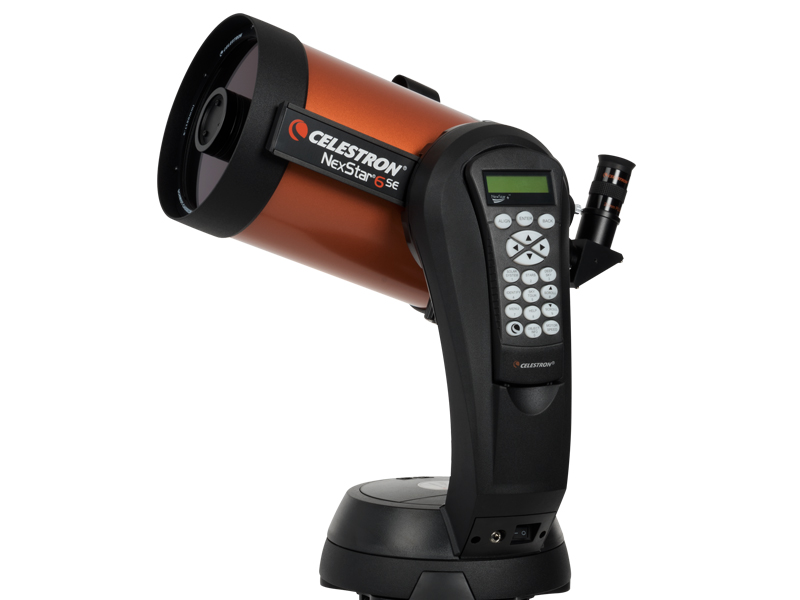
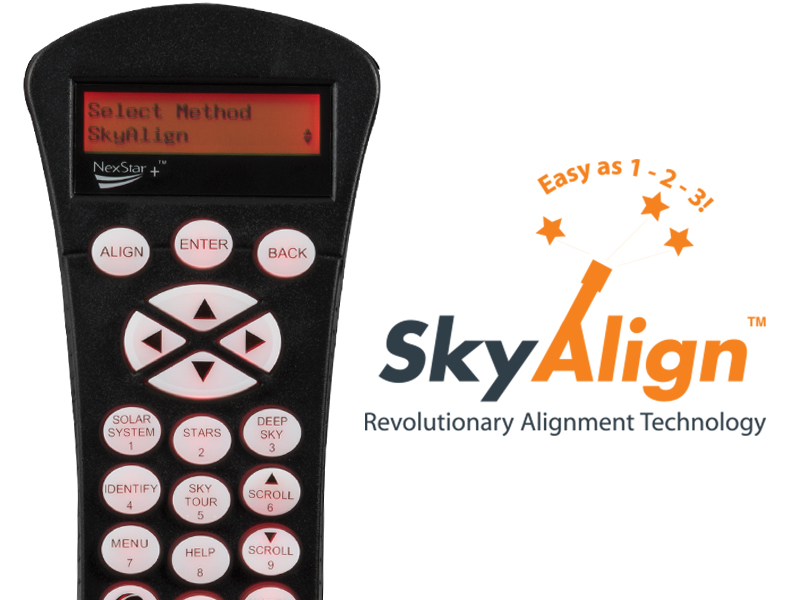
The Celestron NexStar 6SE is a portable, computerized 6-inch Schmidt-Cassegrain telescope featuring a fully automated GoTo mount with a 40,000+ object database and SkyAlign technology for quick setup. Ideal for both beginners and advanced users, it offers detailed views of planets, the Moon, and deep-sky objects. Compatible with a wide range of Celestron accessories, it supports future upgrades and comes with a 2-year warranty and US-based customer support.


| ASIN | B000GUKTDM |
| Additional Features | Fully Automated GoTo Mount with 40,000+ Object Database |
| Brand | Celestron |
| Built-In Media | 25mm eyepiece, Accessory Tray, NexStar+ Hand Control, Optical tube, Single Fork Arm Mount and Tripod, Star Diagonal, Star Pointer Finderscope |
| Coating | StarBright XLT |
| Compatible Devices | Camera, Smartphone, Celestron Accessories |
| Customer Reviews | 4.4 out of 5 stars 2,500 Reviews |
| Dawes Limit | 0.77 Arc Sec |
| Exit Pupil Diameter | 2.5 Millimeters |
| Eye Piece Lens Description | 25mm eyepiece |
| Field Of View | 1.7 Degrees |
| Finderscope | StarPointer™ red dot finderscope (includes 51632 with CR2032 battery) |
| Focal Length Description | 1500 Milimeters |
| Focus Type | Manual Focus |
| Global Trade Identification Number | 00050234110686 |
| Item Dimensions D x W x H | 32"D x 34"W x 52"H |
| Item Weight | 21 Pounds |
| Manufacturer | Celestron |
| Manufacturer Part Number | 11068-CGL |
| Model Name | 11068 |
| Model Number | 11068 |
| Mount | Computerized Altitude-Azimuth Single Fork Arm |
| Number of Batteries | 1 CR2032 batteries required. (included) |
| Objective Lens Diameter | 150 Millimeters |
| Optical Tube Length | 406 Millimeters |
| Optical-Tube Length | 406 Millimeters |
| Power Source | 8-AA batteries, 12v AC adapter, or any of Celestron’s PowerTank external power sources – none of which are included. |
| Telescope Mount Description | Computerized Altitude-Azimuth Single Fork Arm |
| UPC | 050234110686 |
| Unit Count | 1.0 Count |
| Warranty Description | 2 Years |
| Zoom Ratio | 60x |
C**R
A very nice scope
I bought the 6SE through Amazon and also bought the Celestron lense/filter collection and the AC adapter. Everything arrived on time and intact, despite UPS's best attempts to damage the telescope box. Kudos to Celestron for their packaging. Collimation was perfect right out of the box and didn't need adjustment. I've used the scope on virtually every clear night for the last month and am very impressed. Sky Align is a breeze. The only times it has failed I either forgot to enter the correct date or time. After that it is a matter of finding 3 bright objects in the night sky and centering them in your eyepiece. HINT: I use the 27mm eyepiece to initially find each object (after using the finder scope) and then add the 2X Barlow to more accurately center the object. I usually pick some star in the Big Dipper, Capella, and for the time being Jupiter as my alignment objects. Works every time I input the right info. There is a bit of a learning curve so don't expect the unit to bend to your will until you've learned the system. The 'Identify' feature is great for a newbie astronomer like me: Point at the object and NextStar tells you what it is. I've spent a lot of time viewing Jupiter and images of it and the 4 visible moons are clear and crisp using the provided 27mm eyepiece as well as the 9mm and 15mm eyepieces I purchased separately, all 3 alone and with the 2X Barlow. Tracking is not all that accurate unless you sync to the object (in the 'Align' menu. Then it is much better. A list of Strengths and Weaknesses as I see it: Strengths: 1. The price and low cost of accessories. 2. The clear images. 3. Ease of setup and alignment. 4. Portability of the SC design. Weakness: 1. The provided level is junk. I use a 4" builders bull's eye level for much better accuracy. 2. You must remove the telescope from the tripod for leveling. Leveling with the scope attached to the tripod produces an error of approximately 1.5 degrees. In that respect it would have been nice if Celestron built an accurate level rather than the logo into the base. 3. The AC adapter turns with the scope so it is possible to unplug it or entwine your tripod during a night's viewing. If you unplug you lose your alignment, so always have batteries installed even if you use the AC adapter. A nice future upgrade would be to install the plug for the adapter in the non moving part of the base. It merely requires 2 contacts on 2 spiral tracks between the movable and stationary parts of the base. 4. Unless you use the Sync option, alignment seems to deteriorate over the course of a couple of hours. I am careful with the initial alignment as detailed above so I do not think that is the problem, rather something in the software. This is evidenced over the course of an evening by slewing back to an object (Jupiter in my case) using the GOTO Planet on the keypad. Over a period of time each return is farther to the left of center and lower in the field of view. 5. Keeps me outside on cold nights exploring the skies rather than inside by the fire. Still a 5-star product I am very happy with.
I**N
Great Telescope !
When I was a kid in the late 60's, my folks got me a Tasco telescope, had a lot of fun with it. In 2007 I got a Bushnell reflector telescope as a gift. Both telescopes were the lower end of the quality window but still enjoyed using them. I finally decided to upgrade for several reasons. Neither telescope would track an object through the night, after about a minute in the eyepiece, the object would be out of view and a readjustment was necessary. Finding anything in the sky was a pain as I had to rely on my knowledge of where to point the telescopes. The Bushnell came with a sort of 'guide' to help, and it did, but it was just mainly in the general direction to point the scope. And then the lenses that came with both the telescopes were cheap and hard to focus. These telescopes were very beginner based models. After looking around on the web, the Celestron telescope was often mentioned in the top 10 or so of quality scopes to purchase for the price, and the Nexstar SE series was getting very good reviews. After much deliberation and a cut in price of over $200 one day, I ordered the Celestron NexStar 8 SE. I also ordered the X-Cel LX 25mm, 9mm, and 5mm eyepieces to go with it, it comes with a lower quality 25mm Plossl lens. I also got an X-Cel 2x Barlow lens and a zoom lens from Celestron, the zoom works okay but is not in the same league as an X-Cel, and a Celestron StarSense Automatic Alignment device to help in locating celestial bodies. Also got the AC Adapter as the reviewers everywhere said don't rely on the 8 AA batteries to run the device as they die quickly. Of course the day it arrived it was cloudy for three nights, which gave me a chance to really review and read the instructions. It was delivered safely and fast, the telescope was in a box, in another box, and then another box in foam, so no problems there. If I had any issues, it was with the assembly instructions, they never actually show you how to put the orange tube on the fork, which IMO was the most important part. After looking at the pictures in the manual and checking Youtube vids, I was able to figure it out (I had it on upside down and backwards). Otherwise no problems. Once I had a clear sky I took it outside at dusk and set it up, just lined up the index points and aimed the scope at the horizon, leveled it by eye and took off. I did use the StarSense Auto Alignment unit to calculate the position and within about 7 minutes was enjoying the sights of Jupiter and the Moon like I had never seen them before. Saturn is still below the horizon, but I can imagine it will be a sight to see also. The telescope is definitely worth it, the X-Cel lenses are a must, so clear and great views and focus ability. The zoom lens was actually used the most as I could capture an object in the sky and then zoom in and out easily, and the zoom lens has a rubber eyepiece so you can still wear glasses if you want. The absolute best part was being able to use the handheld remote and tell it to find something, a star, galaxy, planet and then it slews right to it. The first time it was a little off because of user inexperience, so I doubled down and researched it, actually called Celestron and talked to a live person and then the second time was ready. You do need to keep a few things in mind. Try to insert the EXACT time into the controller ( I used my iPhone, I just set it for the next minute at 00 seconds, and then wait for the second hand to hit the 12 and then hit enter on the controller, perfect), be sure to set the time correctly, UTC 24 hour time (i.e. 9PM is 2100), make sure you have the correct time zone and daylight savings time set correctly. Also try to set the correct location as close to where you are setting up, again I used an app on my iPhone to give the correct longitude and latitude coordinates. You have to enter the degrees and not the decimal coordinates, also make sure to get the north/south and east/west location right. Then you have to align the scope to find out your best calibration, take your time, it is definitely worth it. I used the StarSense Auto Alignment method, so your calibrations may be a different set of instructions. After the final alignment (which took all of about 5 minutes), I told the hand controller to find a star and it slewed right to it, in the absolute center of the eyepiece and then tracked it for as long as I had it on there. Fantastic, it was doing everything it was advertised, I am very happy with this purchase. It is a heavy telescope, I have to have help to move it safely in and out of the house, you may be able to move it by yourself, or take the tube and fork off the tripod and reassemble in your viewing location. Only con I can see is the hand controller is a bit hard to see at night, just a little dim, I remedied that with a small flashlight with a red lens to keep down the light pollution, but I found you can control brightness and contrast on the controller so problem solved. Very glad I finally have an almost pro (IMO) telescope. After I see an object I can tell my wife to look at it and she was amazed at the improvement over the Bushnell scope, and since it tracks the object, no need for a readjustment every 45 seconds... Great value for the money, great construction, I called Celestron for help and was talking to an expert in two minutes who knew exactly what I was talking about, would recommend this telescope to anyone who wants to experience astronomy.
W**T
Buy the scope, but you may want to invest in a power supply and a better finder scope
I love this scope. It deserves 5 stars, but I would knock one-half star off if I could for the following two reasons: 1. No power supply. You have to buy 8 AA alkaline batteries to use it at all, and they don't last more than a few nights of viewing, depending on how much you move the scope around, and how long you have it powered up. At this price, Celestron should include a power supply, whether it is a wall wart or something like a lithium power pack (good units that they do sell separately), even if doing so adds another $20-80 to the sale price. The scope moves more slowly (but not terribly slow), and the hand control backlight is dimmer, when running on the internal batteries. You'll likely be back on Amazon again soon after you take delivery, looking for something better than the internal battery setup. My advice is to avoid buying a wall wart unless you have long extension cords or AC outlets very near your intended viewing spot. Instead, spend a few more dollars on a portable lithium battery supply from Celestron or a third party, and you'll have plenty of power and mobility, too. The scope has an external power socket-- the common 5.5mm by 2.1mm bayonet, and it does not need exactly 12 volts DC. It apparently tolerates 11-14.5 volts or maybe a bit more. You can also buy a Celestron cigarette lighter plug, so it should be compatible with standard automotive battery power. In my case, I bought this compact lithium pack and I'm very happy with it: https://www.amazon.com/gp/product/B07YRZYLKV/ 2. The "Star Pointer" spotting device included with this telescope is OK-ish, but as time passes, you may want to consider an optical finder with some small level of magnification and possibly crosshairs. I'm planning to do this in the near future after my credit card cools off. I'm not a big fan of the Star Pointer. Some people like it, others have said it's not aligning with the main scope for them. I spent more time fumbling with mine than I did with the rest of the scope. Some of the fumbles were my fault, though. There are a few YouTube videos that show possible solutions if you can't get your Star Pointer and your telescope to agree with each other. The idea is to add a small shim, like thin cardboard or even a US dime, under the back of the dovetail bracket. Just loosen the two screws and slip the shim under the back, then re-tighten the screws that hold the finder dovetail in place. It gives some extra tilt inward and downward towards the telescope body. If you can't center the image and it feels like you need to move the red dot down and to the left of the end of travel, you might try this. Celestron has made a very good, solid telescope with super optics. I'm a big fan of the hand control and its built-in ability to help you find great stuff in the sky. It's first-rate. It's especially good for novice astronomers, in my opinion, and saves a lot of time that would otherwise be spent searching for things when you're new to the hobby. If you don't mind some advice: PLEASE, if this is your first telescope, don't buy a bunch of extra eyepieces, filters or Barlows just yet. Enjoy the included 25mm eyepiece first. It has plenty of magnification without being too much--and too much is what a lot of newbies (myself included) end up with. If you buy eyepieces that give you greater magnification, you'll only be frustrated until you get to know your way around. If anything, you'll get a lot of use out of an eyepiece that even widens your field of view more (lower magnification), like a 32-40mm eyepiece, or even a focal reducer. I have the Celestron f6.3 focal reducer/corrector, and I couldn't be happier with it. As a last thought, get one of Celestron's inexpensive, but surprisingly good 7 X 50 binoculars. At 7 times magnification, they are great for viewing the constellations and helping you decide what part of the sky to point your telescope at next! I'm happy I got both. The telescope and the binoculars each add their own level of joy to the night's experience. Even in a suburban environment with lights all around us, I'm still blown away by how many stars I can see with the binoculars compared to my unaided eyes. And of course, the telescope just makes everything that much closer and brighter.
S**E
Perfect value beginner telescope. Needs power adapter (AC, Cig lighter or powertank) and eyepiece upgrades to really be fun...
This is a GREAT telescope. Don't let other reviews or Youtube videos try to convince you that you should go with the 5" or 6" since they are smaller and more portable...light gathering ability is EVERYTHING in a telescope, and the 8" gathers ~78% more light than the 6SE model. Out of the box, however, so you are not disappointed, there is a bare minimum of two accessories that you MUST have: 1) Either an AC adapter to power the scope or a Celestron "PowerTank" or a car or motorcycle battery with a car adapter cord to plug in to your telescope. I have the Celestron Power Tank 17. The power tank uses cigarette lighter style power cords which you can also plug into your car's dashboard if observing remotely next to your vehicle and you buy the car adapter. Although the scope can run on AA batteries, it will eat them up in less than an hour, rendering the scope slow and eventually unusable. 2) Buy a dew shield (Celestron #940009 for 8" scopes) , which is only $23.00 or so...that will keep the night dew from forming on the front of the telescope's "corrector" (the front of the telescope) as the temperature drops at night. The above is the bare minimum I would order if buying this telescope. Anything less will adversely impact the enjoyment of it. Expectation management: With the above, yes, in the summer in the Northern hemisphere, you can see the rings of Saturn and you can clearly make out Jupiter. It will blow your mind if you've never seen those planets with your own eyes. However, don't expect to see great detail and have the image fill up the view as some of the pictures in these reviews indicate. The human eye cannot see the color and detail that a long exposure (30 seconds or so) can reveal when you hook a camera up to this telescope. You will immediately want some eyepieces that allow you to zoom in further, so let me help you with that process. I strongly recommend that you buy a 2" diagonal and eyepiece setup. Again, the scope, out of the box, only comes with a single 25MM 1.25" eyepiece, which has a narrow field of view and not enough magnification to really enjoy your first astonishing views that get you hooked on astronomy, like looking at Saturn and seeing the gaps in the rings. Celestron sells a kit that has a diagonal, 2X Barlow Lens and three 2" eyepieces (Kit #94305 - $300.00). You can buy that for starters to get you going with 2" eyepieces at the lowest cost. If you have the financial means to "do it all right the first time" without buying the same type of things twice, I would recommend that - instead of buying the 2" starter kit - you buy the Celestron 93527 2" diagonal, which has the Starbright XLT coatings and can be used with 2" eyepieces as well as the 1.25" eyepiece that comes with the telescope, the Celestron Luminos 2.5X Barlow lens (#93436) which will allow you to more than double your magnification with any eyepiece, and some better eyepieces. Most people will tell you that you can get by with about three eyepieces initially. Here are some recommendations: If money is no object, buy TeleVue. They are the high-end in the telescope world. Around $300-$800 each depending on what you choose. If you are going to spend that kind of money, join the CloudyNights forum and get some custom-tailored recommendations from other TeleVue users. I'm going to stick to cheaper (but still good) products that are well respected and a good value. First eyepiece: Meade Instruments Ultra Wide Angle 20mm 2-Inch Waterproof Eyepiece (7743), which you can get here on Amazon for around $120. With the aforementioned Barlow adapter, that will give you 20 MM and 8MM views. Second eyepiece: Explore Scientific 82° 30MM eyepiece. In order to use it, you will have to add a longer dove-tail rail to your telescope to move the scope farther forward in the mount to balance it out.I use an ADM V Series Extra Long (VC-8XL). I had to cut the aft mount bracket to make it fit on this telescope. With the 2.5 Barlow, that gives you 30 and 15MM views. You can buy Celestron Luminos eyepieces, but they sometimes suffer from Edge Of Field Brightness (EOFB) which some astronomers find distracting. If you go with Luminos, buy the 19MM and 23MM. I own those two, but they are not as good as the other two I recommended. If you did not know it, in the telescope world, the smaller MM eyepeice means more zoom-in (greater magnification). You divide the focal length of the scope (2032MM for the Nexstar 8SE) by the eyepiece MM to get the zoom...Example: 2032/19 = 107x. You can use the diagonal and eyepieces I have recommended with larger Celestron telescopes should you upgrade in the future to an even larger telescope (I have a Celestron C11 on a CG5-ASGT mount as well). This scope is perfect for a beginner, can be set-up in about 10 minutes, and aligns easily by pointing to three bright objects in the sky. It is the ultimate "grab-n-go" telescope. It is NOT ideal for astro-photography, as it is an Altitude/Azimuth (ALT/AZ) telescope and BOTH motors must run at the same time to track an object, which is not as precise as a German Equatorial Mount (GEM) where only one motor has to run to track an object. GEM's require polar alignment, which is a bit complex for the beginner. If a bigger easy-to-use ALT/AZ scope is wanted, the next step up from the 8SE would be the CPC Deluxe 925HD (9.25") or CPC 1100 series (11")...or if you get into Astronomy and astro-photography, jump to a GEM telescope. 4 Stars since it does not include an AC adapter or DC cigarette lighter cord out-of-the-box. With those items, I'd give it 5! Perfect value beginner telescope. Needs power adapter (AC, Cig lighter or powertank) and eyepiece upgrades to really be fun...
J**L
Wonderful scope for the amateur astronomer that requires portability
I have owned several scopes over the years: a Meade ETX-90, an Orion 6" DOB, and a Zhumell 10" DOB (which I returned - read on). When I recently renewed my passion for astronomy earlier this year (2010), I started pulling out my little ETX-90 on a regular basis. Unfortunately, the aperture size and long focal length really limited my viewing to Saturn. I decided it was time to go for something with a bit more power. I bought the 10" DOB I mentioned above. It wasn't passed than the third trip outside, precariously carrying the OTA (Optical Tube Assembly) while "butting" the door open and avoiding hitting my dining room table, that I decided I needed to return that monstrosity for something more portable (by the way, it was a wonderful scope! If you can store it where moving it isn't a problem, it'll do the job!). Enter the Celestron NexStar 6SE. When the scope arrived, I opened the box and pulled out the parts. Having watched the instructional video on how to assemble the item earlier in the day, I didn't even need to look at the directions to get it put together. The tripod was solid and had little play. The OTA was easy to "drop" onto the pins on the tripod, and then I only needed to lock down the three knobbed screws to mount the scope completely. I did need to align the viewfinder, which was easy enough by lining up on Venus. I had forgotten how much I liked the GOTO system (my old ETX-90's mount had long ago stopped functioning). For the 6SE, I used the NexStar alignment method on my first attempt, which simply required 3 bright objects in the sky - I did not need to know what the objects were (you will, however, have to enter some other info like your latitude and longitude, time zone, date and time. Your latitude and longitude is easily found online). It was now time for the first viewing. I selected my old standby, Saturn. The scope slewed very quickly to the object, even going back and forth a bit to account for any play in the gears. When I looked through the low powered eye piece (25mm), Saturn was just left of center (likely my fault on the initial alignment). I then manually centered the planet and replaced my eye piece with a higher powered piece - a 9mm lens. All I can say is wow. I live a few miles from the Pittsburgh International Airport, so light pollution is a real problem for me. But, Saturn came in as crisp as I have ever seen it, and 4 of her moons were very easily discernible. However, planetary viewing isn't so difficult with even the most basic scope. I decided to try a few more difficult targets. I could see that The Big Dipper was out, so I typed in M51 - The Whirlpool Galaxy. After a few quick moments of slewing, I took to the eyepiece again (back to the 25mm, btw), and there were two "eyes" looking at me (M51 is actually two galaxies). Of course with bad seeing conditions and a 6" scope, I could not make out any of the "arms" of the galaxy, but I could easily see the telltale fuzzy eyes. I was quite surprised I was able to resolve them that easily with the smaller aperture on this scope! I don't remember my old 6" DOB having that easy of a time, but maybe that was due to the GOTO capability of this item. Next, I turned my attention to M81 and M82, two other galaxies very close to The Dipper. They came in great, with M82 showing off its profile nicely even with my (relatively) bad seeing conditions. Finally, I hit M3, which is a brilliant globular star cluster. The cluster was a wonderful view in this scope. Switching to a higher power eye piece caused many stars to shimmer in and out of view - it was jaw dropping. Anyway, I wanted to point out that, if you need a portable scope that is capable of showing you some wonderful astronomical sights, this scope fits the bill. Although another reviewer is right in that the stock eye pieces aren't incredible (nor are any other stock pieces!), you would certainly be happy with this scope for the occasional "quick" viewing session. Heck, put a few additional dollars (well, a few hundred!) down for some better eye pieces, and you'll be thrilled for years to come! One final note: due to the design of the Schmidt Cassegrain scope, you are almost required to buy a dew shield, unless you live in Phoenix or some other really dry area. Here in the northeast, my scope fogged up very quickly. I was able to build a temporary dew shield with some black construction paper that worked fine, but that's no long term solution. Astronomy is certainly not a cheap hobby! Overall, I am very pleased with this scope. And, unless you are more than casually into this hobby, I think you will be, too.
S**0
Very disappointed and feel cheated. Uses old technology in a shiny package.
First off, there is nothing easy about using the Celestron Nextar 8. It's complex, frustrating, and fails to deliver on Celestron's marketing promises. For example, the hand controller functions like it was designed and built in 1988. It has a cheap LED display and tedious, needlessly complex & un-intuitive menu operations. One must endure a labyrinth of menus just to set it up. Inconceivably, the controller loses its time setting every time you shut it off. That's just amazingly poor design. They do occasionally update the goto controller firmware, but pray that you don't have to ever do this. Celestron's process is out of the stone age. It requires an antiquated RS-232 cable (think 1970's and 80s cables) to update its firmware. Hello Celestron Engineers - USB has been the primary way to connect to computers since 1996 - it's long past time to adopt it). Celestron also gives the middle finger to Apple customers...apparently they don't want them as customers at all. If you use a Macintosh but need to update your firmware you are out of luck. Same deal for Linux users. Next issue: doing the star alignment should be easy, but it is definitely NOT. Even the customers who like the product admit that it takes a lot of very careful precision to successfully align. The tiniest errors with leveling your mount, entering the time, or lining up the stars in your eyepiece and you'll be stuck in "failed to align" hell. Be prepared to go through the alignment routine many times just to get started, then to repeat the procedure after you frustratingly lose alignment. When I realized I was spending more time aligning than looking at stars I gave up using the go-to feature. Now I just use the direction arrows to manually find objects. My own eye coupled with a handy app on my iPhone is far more effective than Celestron's ineffective go-to software. It's not that hard and kinda fun, but now I am stuck with this expensive go-to mount that is useless that taunts me every time I try to use it with how much money I wasted. The most frustrating part, though, is that once you think the telescope finally IS aligned it actually ISN'T. After alignment I've been able to get it to correctly point to a database object or two, but ask it to move to a third object and you can just forget it...unless you want to go through the 10 minutes of re-leveling and re-aligninging. In my opinion the mount, controller, and software are all junk. The optics are great...when you can get them pointed at the object you want to see. Buyer beware: This is a complex product, apparently built on an old hardware and software technology platform, that is frustrating and disappointing to use. Think about how amazing a go-to telescope would be if Apple or Google designed one. Celestron's product is the opposite of what you just imagined. They can and should do better.
E**E
Great purchase!
Where to start...first, I am so happy with this telescope! We transitioned from the Celestron 80MM Star Sense Explorer to this scope. Quite a jump, I know but so glad we did. So...it was a bit heavier than expected but manageable. I had to do a lot of reading and I am still learning about the "utilities" and settings and it definitely took some time to get used to. The manual is okay but you will find more on You tube and on the Celestron website for tutorials. Putting the scope together was simple enough. The red dot finder is not great, definitely need to upgrade that if you choose not to purchase the Star Sense Auto Align. More on that later. The 25 mm lens that comes with the scope is actually really good and we pair it with the Barlow lens. The scope arrived in great condition and was packaged nicely. The tripod is decent and easy to adjust. So back to the Auto Align. the first few times we took the scope out we attempted to use the 3-star alignment....never could get it to work correctly....having said that...we live in a light polluted area near Nashville so we expected some issues. After attempting this alignment several times we decided to purchase the Star Sense Auto Align...I know it is fairly pricey but wow, so glad we did!!! The Star Sense aligned the first time and has worked great each time (read my review on that one as well, hopefully it will help if you decide to purchase it). I had never seen the Orion Nebula before and my first early morning viewing was breathtaking! Views of Saturn, the Moon, and Jupiter are fantastic...you can see the Cassini division in Saturn's rings. Images are clear and detailed. The one thing that I was unaware of when purchasing this scope and only found out after watching some You Tube videos is that you have to upgrade the firmware on the mount....the joy of being a newbie! So things we purchased for this scope that may be of use for someone purchasing it: 1. Celestron X-Cel 12 MM lens 2. Celestron X-Cel 3x Barlow 3. Celestron Oxygen iii Filter 4. Baader UHC-S Nebula Filter 5. Celestron Solar Filter (8" for the 8 SE) 6. Celestron Lithium Power Tank 12 V (a must have or you will be replacing batteries every 30 minutes) 7. Colored filters but mainly Red, Violet, Blue, and a Moon filter...haven't used the other colors yet. Orion has a great set, although it is expensive. 8. A carrying case- we travel a lot....Celestron has one for this tube size, otherwise use the boxes it came in- they work just as great! 9. A pelican case for your eyepieces and filters....we purchased one with pullouts and made our own...or you can buy one from Celestron. 10. And a must have for those living in the South or colder climates...a dew shield or heater! 11. A red flash light or just use the red light on the Lithium Power tank. 12. Last but not least....for newbies...there are several companion books you can purchase....The Backyard Astronomer's Guide, Night Watch, The Total Skywatcher's Manual, and National Geographic has some great books. We love locating things in the sky, then looking them up and reading about them. The books also contain great tips and suggestions from purchasing eyepieces to filters, and how to best view objects in the night sky. All of these items were purchased on Amazon and we bought them over time but each purchase has enhanced our viewing and really made our nights out so enjoyable. Pros: So many but to name a few... Great, clear images, mostly newbie friendly- just have to educate yourself on operating the telescope to get the most out of it, a lot of items available for purchase to upgrade your experience, and with the star sense auto align you can spend hours outside enjoying clear skies. Not to say most people cannot get the 3-star alignment, we just lost patience with it and purchased the auto align :-) Cons: Manual not so great...You Tube has great videos from knowledgeable enthusiasts, it seems a bit heavy but manageable for one person. My husband is always with me so portability isn't an issue but just going out alone it may be somewhat heavy. Overall, I am so happy with this purchase and would recommend it for anyone wanting to add a more advanced telescope to their collection. There are several tutorials available online at Celestron and via You Tube that I encourage you to view. The telescope can be a bit intimidating for those that are new to the hobby but with a little research you will be loving it! We take it out at least 3x per week (skies permitting). The most beautiful site seen was the other morning I went out at 5 am and viewed Venus...the moon, and Orion's Nebula...so clear and amazing...it was definitely a treasure trove that morning, spent about 90 minutes viewing the sky until the Sun started to come up...very peaceful! We are still learning this telescope and each thing we learn just enhances our experience. I was hesitant on this purchase at first...a lot of money to spend plus accessories but we are so glad we decided to buy it! Definitely do your research to determine which telescope is best for you and your goals but this is a great one for those just entering the hobby or graduating from a starter scope. Now if we could only afford to buy another one of these so my husband and I don't fight over viewing time!
R**H
The Only Telescope You’ll Ever Need
The Celestron NexStar 8SE Computerized Telescope blends powerful optics with user-friendly technology, making it one of the standout choices in mid-range amateur astronomy. At its heart is a classic 8-inch (203 mm) Schmidt-Cassegrain optical tube that gathers impressive amounts of light, delivering bright, detailed views of planets, the Moon, and many deep-sky objects. The system’s StarBright XLT coatings enhance contrast and clarity, helping faint objects pop even under less-than-ideal skies. What really sets this scope apart is the computerized GoTo mount: with a SkyAlign system and a database of over 40,000 celestial targets, you can find and track objects with a few button presses—great for beginners and seasoned stargazers alike. Setup is reasonably quick, and once aligned, the tracking keeps objects centered as they move across the sky. That said, there are some trade-offs. The telescope is not light; its nearly 33 lb weight and single-fork mount mean transporting and assembling it solo can be challenging. The mount shines for visual observing, but it’s not optimized for long-exposure astrophotography without upgrades. Additionally, you’ll need to supply a power source (batteries or external supply), as one isn’t included. Overall, the NexStar 8SE is a high-value telescope that grows with your interests, offering superb visuals and automated ease in a solid, versatile package.
F**M
The Nexstar 8SE, a fine scope!
This is my second scope. The first was a Bushnell 4.5 inch reflector of disputable quality. The mirror was good, but I had to replace the flimzy tripod and get better eyepieces to even attempt to see anything clearly. This telescope is superior a hundred fold . The image of jupiter, for instance, is crisp and clear with the included 25mm eyepiece, Seeing hasn't been very good here, in Quebec City, these last few days, but I was able to observe the king of planets with a 10mm eyepiece and enjoy details impossible to discern with my old reflector. Allignement of the go to is relatively simple. The hand controller has a red backlight to preserve night vision. However, with the backlight on during allignement, the scrolling of instructions on the hand controller display is unreadable. Tracking is good, but I have noticed that occasionaly, the scope seems to loose track of the object, which makes it necessary to use the hand controller to bring things back on track. One of the reasons I purchased this scope was because it can be easily transported and assembled. The tube need not be removed from the mount. It can be rotated vertically to align with the mount arm into a neat compact package easily storable in my OTA bag. The tripod is also compact and light. Contrary to other comments, I find the tripod and mount well built and sturdy enough for the nexstar. A question of opinion, I suppose. I purchased the 18774 power tank with this scope, which I think is essential. The tracking motor will eat through the required AA batteries in no time. I also burchased the AC adapter. There is only one 25mm eyepiece included with the scope. The purchase of a few more of different magnification, a barlow and a few filters such as a lunar filter is a good idea. However, the nexstar is highly usable with the included accessory. There are many resources on the web which are helpful in the use of this SCT. Michael Swanson's Nexstar site, for one, has a lot of good info, although some of it seems outdated. Youtube is also a good source of valuable information. Included in the box: Scope and tripod (obviously) , tripod accessory tray, level for the tripod, 25mm eyepiece, 1.25 inch Star diagonal, Starpointer finderscope, The Sky Level 1 Astronomy Software, NexRemote telescope control software, RS232 Cable (you'll need an RS232 to USB adapter for newer computers) The good: Crisp image Easy assembly Easily transportable and storable Sturdy enough tripod Easy alignement with the hand controller The Bad: Scrolling text on the hand controller is unreadable when backlight is on. Tracking sometimes lost. To conclude, I have so far no regrets with my purchase. And although I have only a few hours of observations with the scope, I am quite satisfied. With mars and saturn soon to be in opposition, I believe the next few weeks will bring loads of astronomical fun. ***After a couple months of use, I thought it would be a good idea to share my experience with this scope. I had mentionned in my initial review that the scrolling text on the hand controller (HC) was unreadable at night, with the red backlight on. As I navigated through the numerous menus on the HC, I realized that I could set the speed of the scrolling, which pretty well solved that problem. So scratch that from the "Bad". The gears in this scope produce some backlash. This problem is well documented on the web and must be taken into consideration when attempting to do a proper star alignement and expect the scope to center on planets. Without some ajustements in the settings of the HC, planets will never align properly in your eye piece once the star alignement has been performed. I've found some very helpful astronomy forums with valuable info regarding different settings to minimize the impact of this backlash. I've added a spotting scope which makes the optical tube back heavy. I had no idea that this could have an impact on the the alignement, but it does. Call that a newb's mistake, I suppose . All in all, my experience with this telescopes has greatly improved with the knowledge collected on the web. So, the second point on my "bad" list still applies, but it can be remedied. My allignements are still not perfect. I still have to test some settings, but I'm getting very close. It's only a matter of time. But all this does not minimize the fact that this great telescope has enabled me to observe the marvels of our solar system and beyond with a clarity that truly amazes me. It's easy to set up, light and transportable. A great buy for a beginner like myself, and certainly for more experienced amateur astronomers. And worthy of its fifth star. (PS. The celestron GPS for this scope is a very helpful addition, by the way.) Celestron 93969 SkySync GPS Accessory
A**2
Good
Very nice and easy-to-use and assemble final i saw Jupiter
P**O
Bel telescopio!
Il prodotto è di buona fattura, non ho trovato difetti di sorta. Buono anche l'imballaggio che può essere usato anche per lo stoccaggio dello strumento. Il treppiede è ben fatto e solido ed è di rapido montaggio con la testa della montatura. Per i principianti come me, consiglio di scaricare il software Celestron per aiutare l'allineamento del telescopio e per l'update del computer della montatura. Sono molto soddisfatto dell' acquisto.
P**A
Excelente telescopio para aficionado principiante - intermedio.
La serie Nexstar SE ha sido reconocida por muchos años por su excelente relación calidad - precio, y el modelo 6SE no es la excepción. Los materiales de construcción son de la mejor calidad, y destaca la firmeza del tripe para mantener al tubo óptico con la menor vibración posible. La curva de aprendizaje es aceptable incluso para un principiante, sin embargo yo lo colocaría en una categoria intermedia. La ventaja en este sentido es que el 6SE es uno de los telescopios más usados, por tanto existe mucha información y experiencias compartidas en línea. La óptica Schmidt - Cassegrain lo hace un excelente telescopio para observaciones planetarias, lunares y solares (con el filtro apropiado). Sin embargo, también da resultados aceptables con objetos de espacio profundo brillantes y de tamaño angular pequeño (nebulosas planetarias, cúmulos globulares, y algunas galaxias). Finalmente el tamaño del tubo óptico es un excelente equilibrio entre apertura y potabilidad, ofreciendo una buena capacidad de acumulación de luz, sin incrementar demasiado el peso y volumen para transportarlo con facilidad. En pocas palabras, difícilmente te puedes arrepentir de invertir en este telescopio. Cielos despejados!
G**N
Great telescope. Would be greater if it came with additional lenses.
This is my first telescope since I was a teen. Setting up the telescope wasn’t easy. Need patience, but once set up great views. As the telescope only comes with one lens, you should include additional lenses with greater magnification.
Trustpilot
2 days ago
3 weeks ago